
 English
  Español
  Deutsch
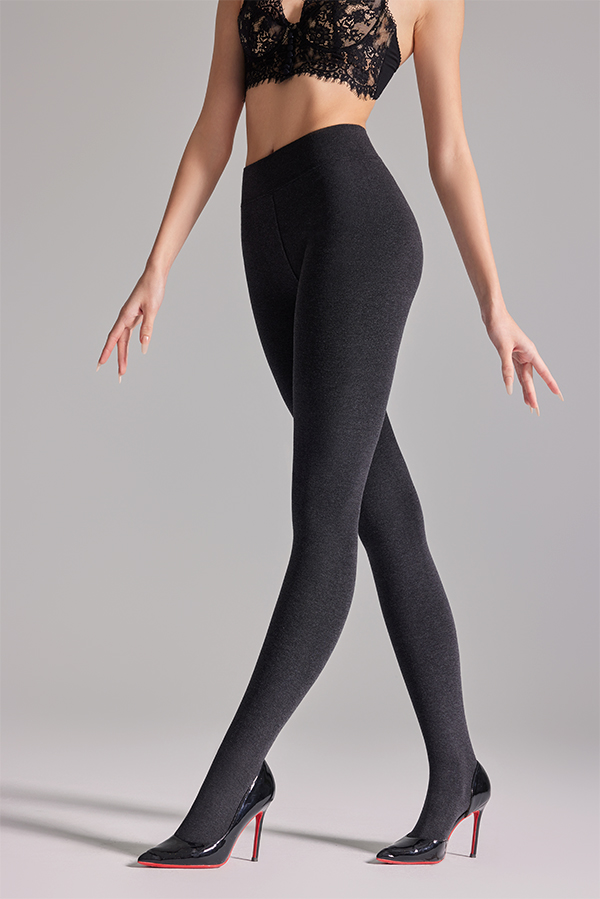
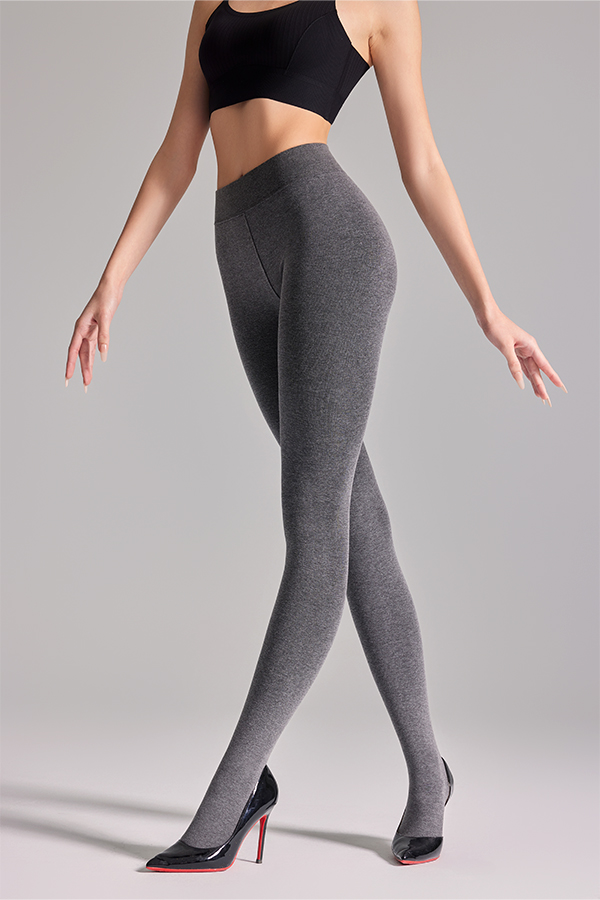
 Expanded panel thermal opaque tights

Our provided products
Printed kids tights are more than a seasonal clothing accessory. They combine warmth, coverage, stretch, color, and visual personality in one practical garment. For children, tights must withstand active movement, frequent washing, changing temperatures, and everyday play. For retailers and fashion brands, they must also offer attractive designs, consistent sizing, dependable quality, and efficient production. Product 6016, presented as Printed Kids Tights, is developed for this combination of commercial appeal and daily performance.
Designed for children’s fashion collections, printed tights can be worn with dresses, skirts, shorts, school outfits, party clothing, and layered casualwear. Their printed surface creates a stronger visual identity than plain tights, while the knitted construction provides the flexibility children need when walking, running, sitting, climbing, and playing. The result is a product that serves both functional and fashion purposes.
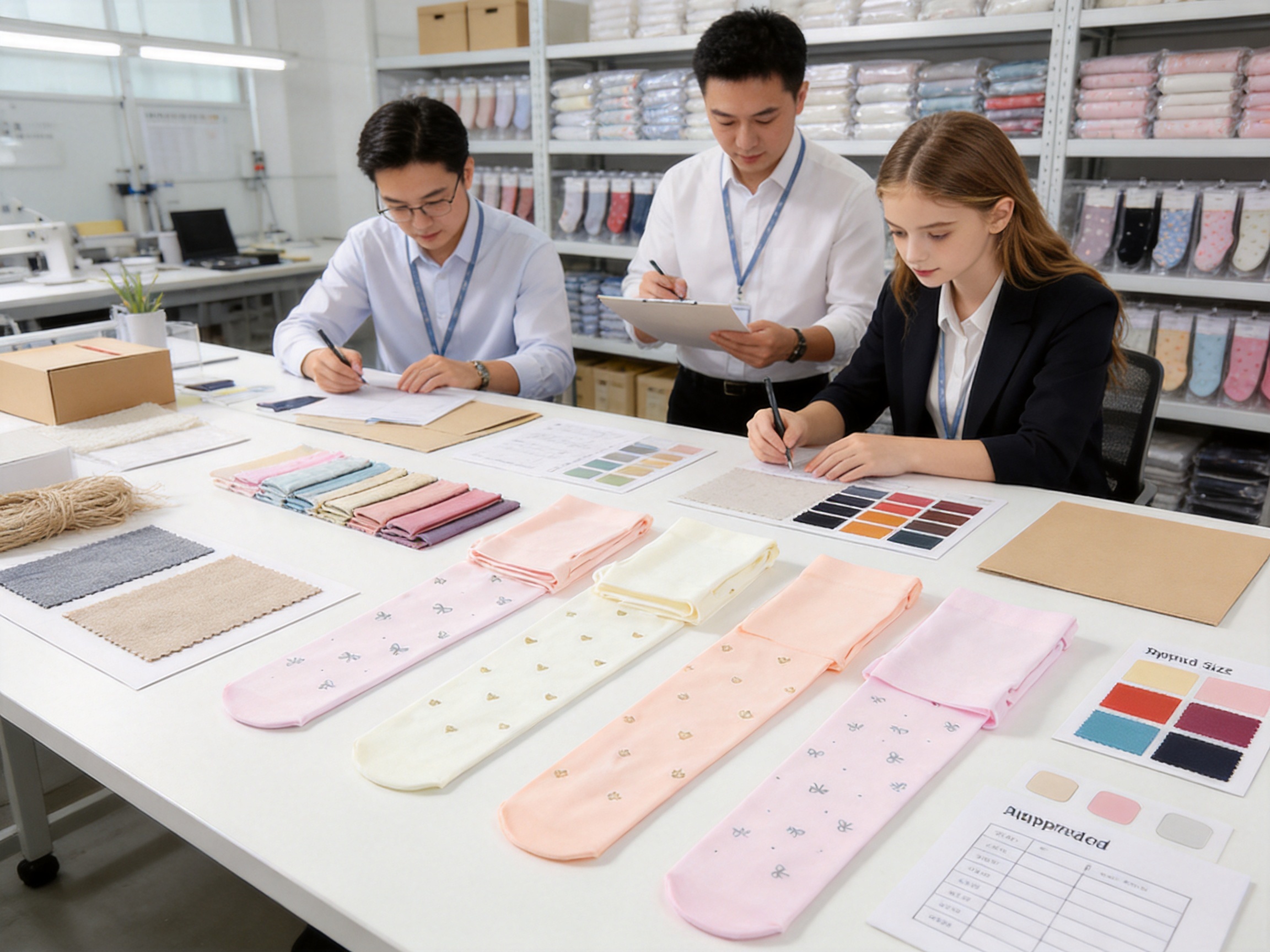
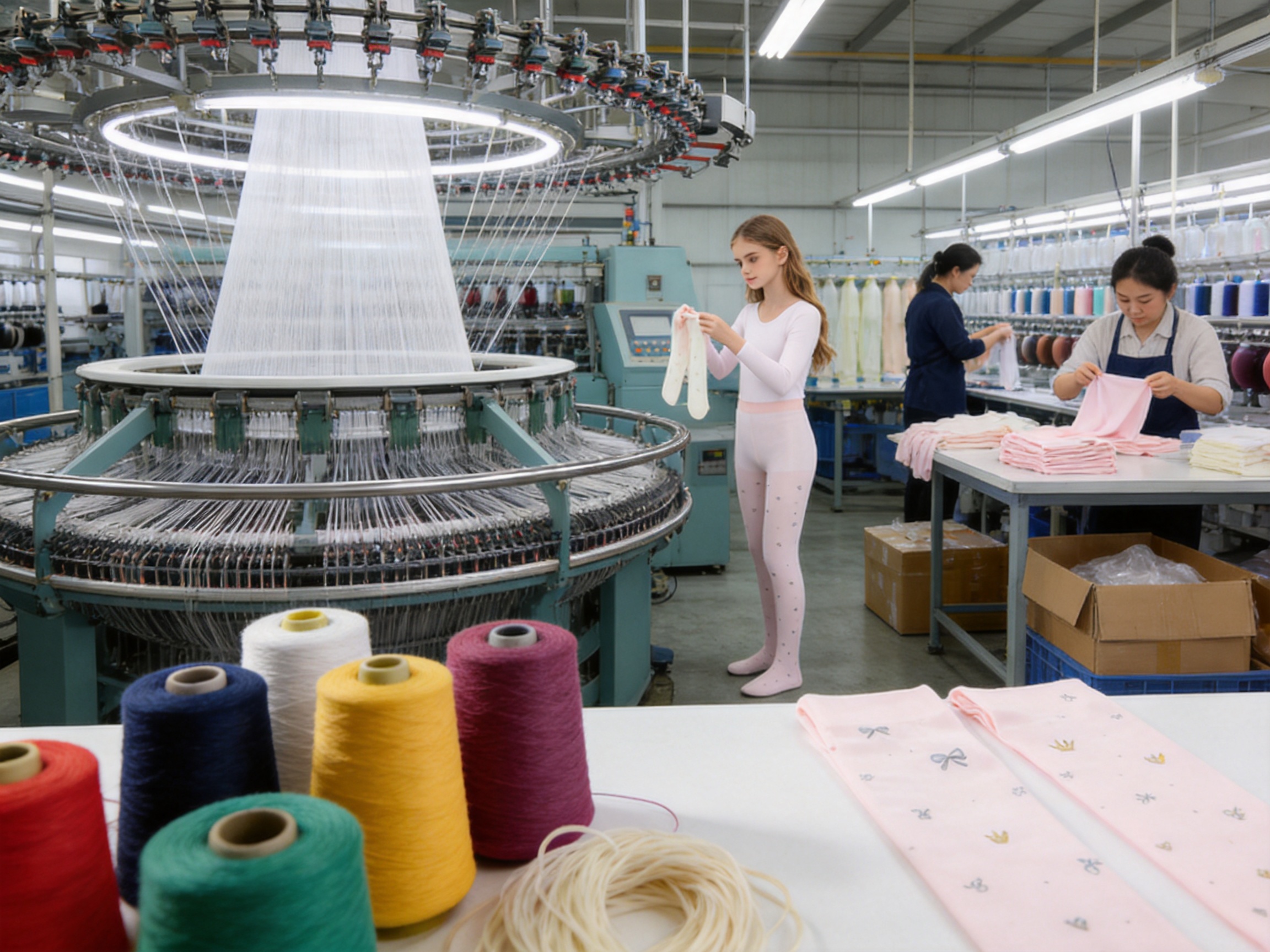
The manufacturing strength behind this category is equally important. Zhejiang Chenyu Knitting Co., Ltd. has developed a complete hosiery production system covering yarn research and development, spinning, elasticizing, yarn wrapping, greige weaving, piecing, dyeing, roughening, shaping, full inspection, and packaging. This integrated structure allows the company to manage more production stages internally, coordinate quality more effectively, and support OEM customization for international customers.
This article examines the product’s key benefits, design possibilities, performance considerations, manufacturing process, customization advantages, and suitability for different retail markets. It also explains why a complete hosiery supply chain can give printed kids tights an advantage over products made through fragmented or less specialized production arrangements.
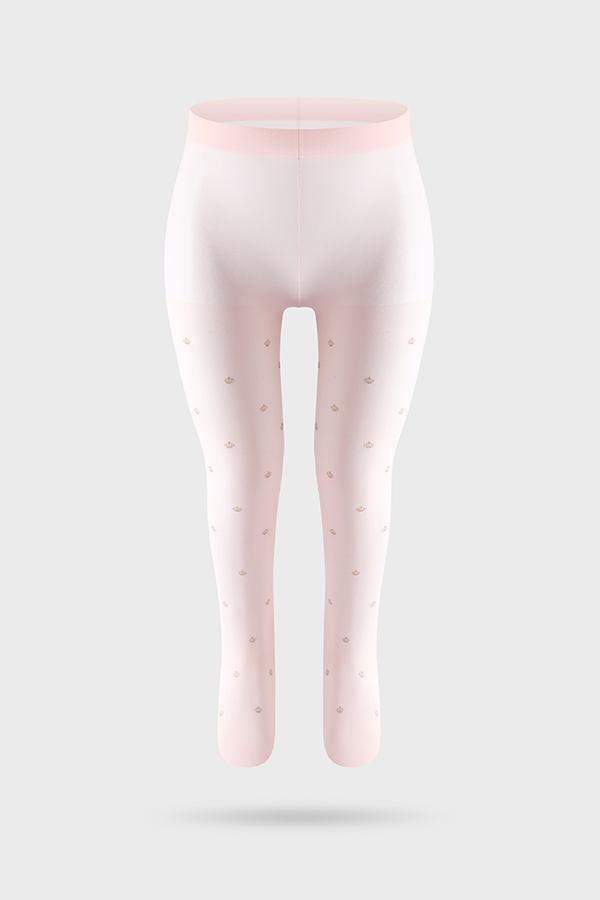
Printed Kids Tights
Printed kids tights are close-fitting legwear designed specifically for children and decorated with visual patterns, motifs, graphics, textures, or repeating color arrangements. Unlike plain tights, printed styles use the surface of the knitted fabric as a design area. This makes them especially suitable for children’s collections, where color, imagination, and recognizable themes influence purchasing decisions.
The category can include subtle patterns for everyday wear, playful graphics for younger children, seasonal designs for holidays, and fashion-led prints for older children. Depending on the intended market, patterns may be delicate and understated or bold and highly visible. A supplier with suitable knitting, dyeing, finishing, and inspection capabilities can help brands develop a broad range of appearances without changing the fundamental comfort and fit requirements of the garment.
The product is also relevant to different retail channels. Department stores may require polished designs and carefully coordinated colorways. Online retailers may prefer highly distinctive patterns that are easy to recognize in product photography. Children’s boutiques may seek limited collections with unusual motifs, while private-label customers may request exclusive artwork and packaging. OEM manufacturing enables the basic product concept to be adapted to each commercial purpose.
Children’s clothing is strongly influenced by visual appeal. A printed design can make a basic pair of tights feel more expressive, collectible, or suitable for a specific outfit. Patterns can coordinate with dresses and skirts, introduce contrast to neutral clothing, or support a seasonal merchandising theme. For parents, the design may make everyday clothing more appealing to children, helping them participate in choosing what they wear.
Printed designs also create opportunities for product differentiation. Plain tights are often compared primarily on price, color, denier, and size. Printed tights give a brand additional ways to stand out through artwork, placement, color combinations, and collection storytelling. A well-planned printed range can contain multiple products for different age groups while maintaining a recognizable visual language.
However, attractive artwork alone is not enough. The print must remain compatible with the stretch of the fabric, the movement of the child, the washing process, and the intended level of opacity. The design should look balanced when the tights are laid flat and when they are worn. This requires coordination between design development, yarn selection, knitting, dyeing, finishing, and inspection.
Children rarely remain still for long periods. They walk, bend, kneel, sit on the floor, run, and participate in energetic activities. Tights therefore need enough elasticity to follow body movement without creating excessive pressure. The knitted construction of hosiery naturally provides multidirectional stretch, while elasticized yarn and carefully selected components help the garment return toward its original shape after movement.
Proper stretch improves comfort because the tights can fit the legs, hips, and waist more smoothly. It also reduces the likelihood of constant adjustment during wear. A well-balanced construction should feel secure without being unnecessarily restrictive. This balance is particularly important for children, who may be sensitive to tight waistbands, rough seams, or fabric that loses flexibility.
Kids’ tights are commonly worn during transitional seasons and colder months. They provide an extra layer under dresses, skirts, tunics, shorts, or loose garments. Depending on yarn selection, knitting density, and finishing method, the product can offer different degrees of coverage and warmth. This makes printed tights suitable for both fashion styling and practical layering.
Coverage is also part of the visual effect. A denser appearance can make a print look stronger and more defined, while a lighter construction may create a softer, more delicate impression. The appropriate choice depends on the design direction, climate, target age group, and retail positioning. A complete hosiery manufacturer can help customers match the construction to the intended market instead of treating every printed style as identical.
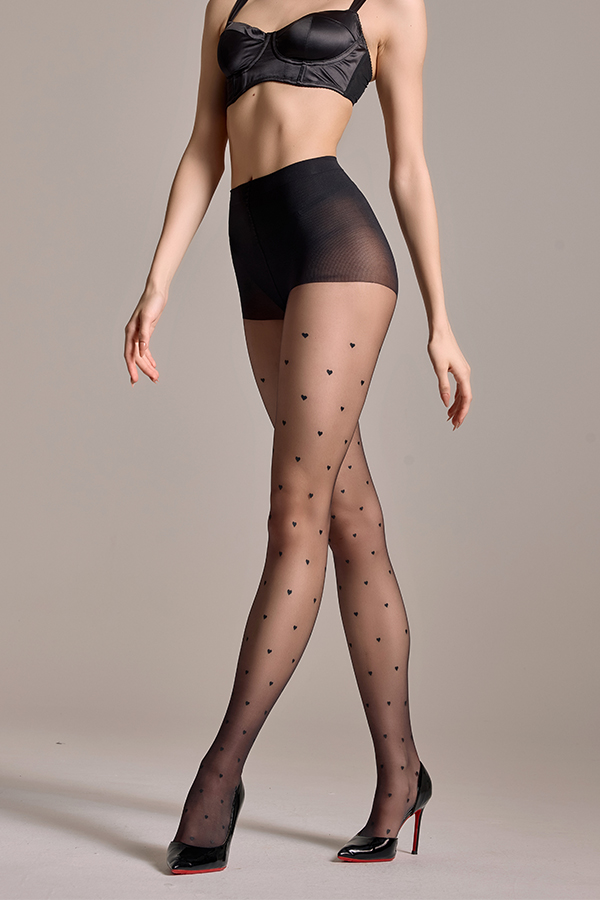
The primary advantage of printed kids tights is their ability to combine function with visual expression. Patterns may include geometric elements, dots, stripes, hearts, stars, animals, flowers, seasonal icons, or abstract arrangements. The design can be repeated across the legs, concentrated around selected areas, or coordinated with other garments in a wider collection.
Printed tights can also be developed in multiple colorways. A single artwork may be produced in soft pastel tones for younger children, deeper shades for autumn and winter, or bright combinations for playful summer styling. This allows brands to extend one creative concept across several stock-keeping units while keeping development efficient.
The children’s hosiery market is not a single uniform segment. Babies, toddlers, young children, and older children have different needs in terms of size, pattern scale, color preference, durability, and styling. Younger children may respond to simple, high-contrast motifs, while older children may prefer more fashion-oriented patterns or designs that coordinate with current clothing trends.
Printed kids tights can be adjusted through sizing, waistband construction, pattern scale, color, and packaging. The product category therefore gives brands room to build tiered collections. A supplier with OEM experience can support different specifications for different age groups while maintaining consistent production control.
Before placing an order, buyers should define the intended product performance and appearance in detail. The product title establishes the category, while product code 6016 identifies the presented style. Additional specifications should be confirmed during sampling and technical development. These may include size range, fiber composition, colorways, print method, waistband type, toe construction, packaging, labeling, and care instructions.
| Specification Area | Key Considerations | Commercial Importance |
|---|---|---|
| Size and Fit | Age range, height range, body proportion, stretch recovery, and grading | Supports comfort, reduces returns, and improves customer confidence |
| Fabric Construction | Yarn selection, knitting density, thickness, softness, and elasticity | Influences warmth, appearance, durability, and price positioning |
| Print Development | Artwork scale, color accuracy, placement, stretch behavior, and wash performance | Creates product differentiation and protects visual quality |
| Waist and Seams | Waistband comfort, seam flatness, reinforcement, and flexibility | Directly affects children’s wearing comfort and product acceptance |
| Finishing | Shaping, roughening where appropriate, inspection, and presentation | Improves consistency, hand feel, appearance, and packing efficiency |
| Packaging | Folding method, labels, inserts, barcode requirements, and retail presentation | Supports efficient distribution and attractive point-of-sale presentation |
Yarn selection affects nearly every aspect of the finished tights. It influences softness, stretch, recovery, surface appearance, resilience, warmth, and compatibility with color or print development. A manufacturer with yarn research and development capabilities can evaluate materials according to the intended product rather than relying on a single standard construction for every order.
Different market requirements may call for different material strategies. A lightweight fashion style may prioritize smoothness and visual clarity. A colder-weather product may require a denser or warmer construction. A value-focused retail program may emphasize cost efficiency, while a premium collection may focus more heavily on softness, refined appearance, and advanced material choices.
Sustainable fabric options are also becoming more important to brands and consumers. The company information provided identifies the use of sustainable fabrics as part of its effort to reduce environmental impact and contribute to a greener future. Material decisions should still be evaluated according to verified composition, performance, certification needs, and customer requirements, but the availability of sustainability-oriented development is a valuable consideration for modern hosiery programs.
Children’s tights should be graded carefully because body proportions change rapidly during growth. A size that is too short can create discomfort at the waist and seat, while a size that is too long may bunch around the ankles or knees. The product needs sufficient stretch to accommodate normal movement, but the basic length and width must still be appropriate for the target size.
OEM buyers should review measurement charts, fit samples, and grading rules before mass production. It is useful to test samples on representative children or suitable fit forms, especially when the product is intended for a new market. Details such as waistband height, gusset construction, ankle width, and toe shape may influence the overall wearing experience.
Consistent sizing is a competitive advantage because customers expect a product purchased in the same range to fit predictably. Internal control across knitting, piecing, shaping, and inspection can help reduce variation between production lots.
The waistband is one of the most important comfort areas in children’s tights. It should hold the garment in place without creating excessive pressure. A stable but flexible waistband helps prevent rolling and slipping, while a smooth finish can reduce irritation beneath dresses or tops.
Seam construction also matters. Children may wear tights for many hours, so bulky or rough seams can become uncomfortable. The toe area should be carefully finished, and the garment should be checked for loose threads, irregular joins, or tension differences. Full inspection is especially valuable in children’s products because small construction issues can be noticeable during wear.
Pattern scale should correspond to the size of the garment and the age of the wearer. Large motifs may appear attractive on a flat design board but become crowded when applied to smaller sizes. Small repeating patterns can offer a more balanced result across a size range. Buyers should review artwork on actual product dimensions rather than evaluating it only on a large digital file.
Placement is another important decision. An all-over pattern creates a lively appearance and can simplify visual coordination across sizes. A localized design may look more premium or distinctive. Motifs placed around the lower leg, ankle, or side area can create a fashion detail without overwhelming the outfit. Placement decisions should account for stretch, shaping, and the way the tights are worn.
Color is central to children’s hosiery merchandising. Bright colors can create energy and playfulness, while muted tones may support a more contemporary or premium collection. Neutral bases with contrasting prints can provide versatility, and coordinated colorways can help retailers build complete seasonal displays.
Color development should include physical samples whenever possible. Screen images do not always represent the final color accurately because of differences in monitors, lighting, fabric surface, and print absorption. A professional development process should include color confirmation, production references, and inspection against agreed standards.
Printed tights can support seasonal launches particularly well. Autumn collections may use leaves, warm colors, checks, or botanical motifs. Winter programs may include stars, snow-inspired graphics, deep shades, or festive patterns. Spring and summer ranges can use flowers, lighter colors, playful animals, and fresh geometric designs.
Brands can also create coordinated collections in which tights match dresses, skirts, tops, or accessories. This encourages multiple-item purchasing and gives retailers a stronger merchandising story. Because the tights occupy a relatively small area of the wardrobe, they can be used as an accessible way to introduce a trend without replacing an entire outfit.
The principal manufacturing advantage of Zhejiang Chenyu Knitting Co., Ltd. is its one-stop whole-industry-chain production system. The company was founded in 1989 and is located in Dongyang, Zhejiang, China. After decades of continuous development, it has established departments covering foreign trade, e-commerce, and OEM customization, in addition to domestic brands and manufacturing operations.
A complete production chain can improve coordination. In a fragmented supply model, yarn development, knitting, dyeing, finishing, and packaging may be handled by separate suppliers with different standards and schedules. That arrangement can create communication gaps, inconsistent specifications, and delays during problem solving. An integrated hosiery manufacturer can coordinate more stages under one management structure, making it easier to trace decisions and maintain continuity from raw material to finished product.
Yarn research and development provides a foundation for product differentiation. Printed kids tights may require a specific balance of softness, stretch, thickness, surface smoothness, and color response. Developing or selecting yarns with those needs in mind can help the manufacturer achieve a more suitable final result.
Yarn development also supports range expansion. Once a supplier understands the performance requirements of a customer’s core product, it may be possible to adapt the construction for warmer, lighter, softer, or more sustainable versions. This can help brands create a coherent product family instead of sourcing unrelated products from multiple factories.
Spinning affects yarn consistency, while elasticizing contributes to the stretch and recovery needed in hosiery. Yarn wrapping can help combine functional properties or create a more suitable yarn structure for knitting. These early stages are important because problems introduced at the yarn level may become more difficult to correct during later processes.
Control over these stages gives the manufacturer greater visibility into the material entering the knitting process. It also supports closer communication between technical teams and production teams. For OEM customers, this can be particularly useful when developing a custom specification that differs from a standard catalog item.
Greige fabric production creates the initial knitted structure before later coloration and finishing operations. At this stage, factors such as loop formation, density, tension, dimensions, and fabric stability are important. A stable base helps subsequent processes produce a consistent appearance.
For printed styles, the knitted structure must accommodate design clarity and stretch. If the fabric is too open, too unstable, or unevenly tensioned, the visual result may be inconsistent. Careful knitting control helps provide a more reliable foundation for dyeing, printing, shaping, and final inspection.
Piecing joins the relevant sections of the hosiery product and contributes to the final fit and comfort. Accurate construction is essential for maintaining symmetry, appropriate length, and consistent proportions. It also affects the appearance of the waistband, seat, legs, and toe areas.
Children’s tights should be checked for construction consistency because small differences can affect how the garment sits on the body. Integrated production allows technical specifications to be communicated across knitting and assembly stages, helping reduce avoidable variation.
Dyeing is a key stage for printed and colored hosiery. The process must be managed to achieve the desired color while preserving the fabric’s hand feel, stretch, and appearance. Temperature, timing, material preparation, and finishing conditions can all influence the result.
Color control is especially important when a brand orders repeated styles or multiple size runs. Consistent reference standards help ensure that one production lot does not appear noticeably different from another. For printed kids tights, the base color and pattern color must also work together so that the design remains legible and attractive.
Roughening or related surface treatments may be used when a particular hand feel, warmth level, or visual effect is required. The process should be matched to the product’s intended use. A children’s fashion tight may require a smooth surface, while a colder-weather option may benefit from a softer or warmer interior treatment.
Surface finishing must be carefully controlled because excessive treatment can affect dimensions, elasticity, or the clarity of a printed pattern. The goal is to achieve the desired comfort and appearance without compromising the basic performance of the tights.
Shaping helps prepare the tights for their intended three-dimensional form. It can improve presentation, stabilize dimensions, and create a more consistent appearance across production units. Proper shaping is particularly useful during inspection and packaging because it makes irregularities easier to identify.
Dimensional stability is important for children’s tights because the garment should remain comfortable after repeated wear and care. Although all textile products require appropriate washing and handling, a controlled manufacturing process can support more consistent results from the beginning.
Full inspection is a significant strength for children’s hosiery. Each pair can be reviewed for visual defects, incorrect color, print irregularities, holes, loose yarns, seam problems, size variation, and packaging errors. This approach helps prevent defective products from reaching retail customers.
Packaging is the final stage before shipment but also contributes to the customer’s first impression. Neat folding, accurate labels, size identification, barcode placement, and suitable protective packaging support efficient warehouse handling and professional presentation. OEM customers can specify packaging requirements to match their brand identity and distribution system.
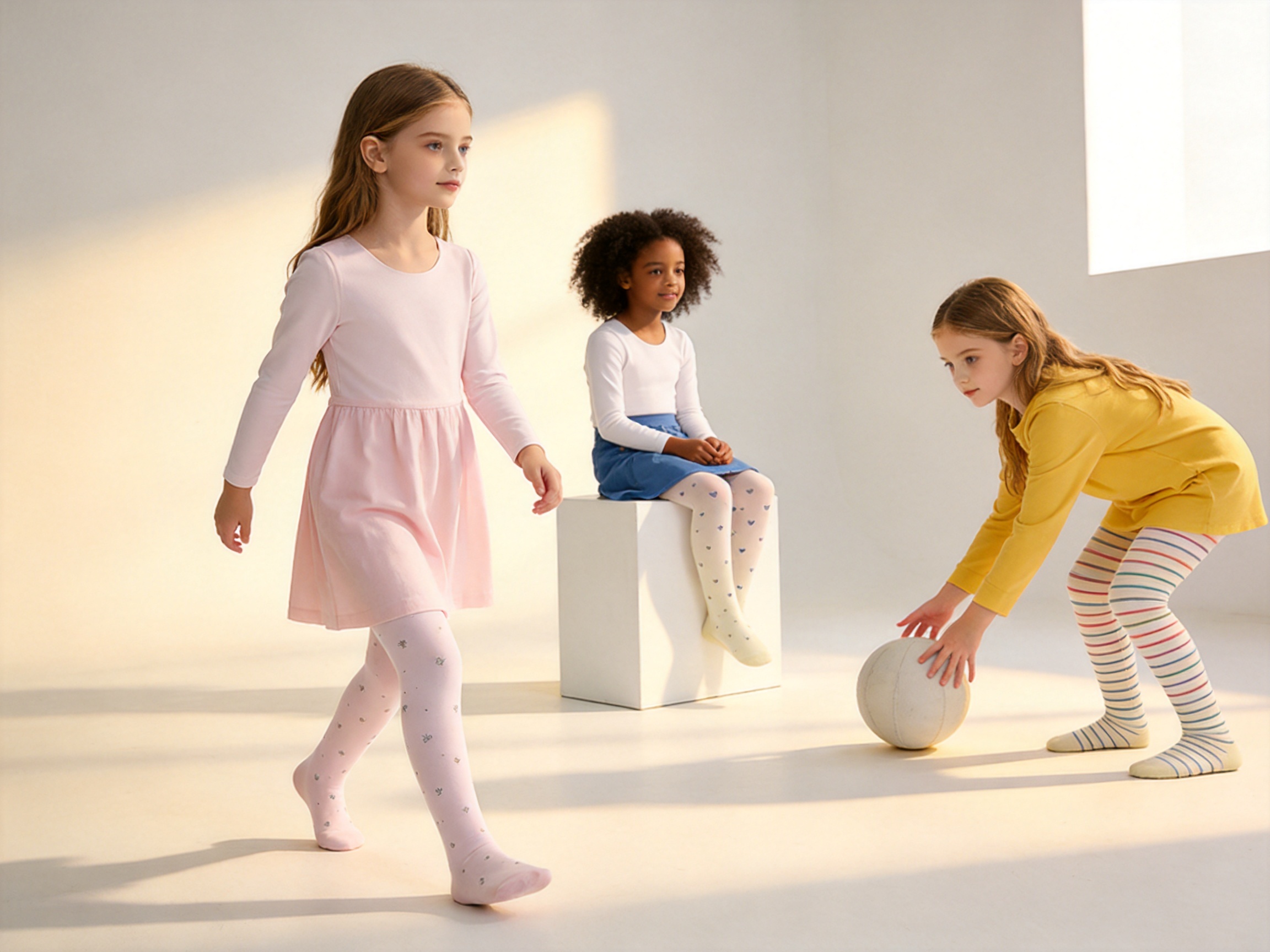
One of the strongest advantages of a complete hosiery industry chain is the ability to connect quality control across multiple stages. A defect discovered during final inspection may originate in yarn, knitting, dyeing, construction, or finishing. If those stages are managed by unrelated suppliers, identifying the cause can take time. When production is coordinated within one organization, the technical team can more easily trace the issue and implement corrective action.
This does not mean that an integrated factory eliminates every production risk. Textile manufacturing remains sensitive to raw materials, machinery settings, color requirements, product dimensions, and order complexity. However, centralized coordination can make risk management more systematic. It can also improve communication between product development, production planning, quality inspection, and customer service.
For buyers, the practical benefit is greater predictability. Predictability supports accurate delivery planning, stable retail quality, and more reliable repeat ordering. It also simplifies communication because the customer can work with one experienced manufacturing partner rather than coordinating multiple separate suppliers.
Inspection should begin with raw materials and continue through the finished product. Yarn should be checked for suitability and consistency. Knitted fabric should be monitored for holes, tension differences, irregular loops, and dimensional variation. After printing or dyeing, the pattern should be reviewed for color accuracy, placement, smudging, and incomplete coverage.
Construction inspection should cover the waistband, seams, gusset where applicable, leg length, ankle area, and toe closure. Finished tights should be checked for symmetry and overall appearance. Packaging inspection should confirm that the correct size, color, label, and quantity are packed together.
Retail buyers generally expect children’s tights to provide a practical service life appropriate to their price level. Important expectations include resistance to early distortion, acceptable stretch recovery, comfortable seams, stable color, and a surface that remains attractive after normal care. The precise performance level should be agreed during product development and validated through suitable testing.
Brands should avoid evaluating quality only by appearance. A pair may look attractive when new but perform poorly if the waistband stretches out quickly, the print loses definition, or the legs become uneven after washing. A balanced evaluation considers appearance, comfort, construction, material behavior, and packaging.
OEM production allows customers to develop printed kids tights according to their own market strategy. Customization may include artwork, color, size range, material composition, thickness, waistband details, labels, packaging, and carton markings. The level of customization depends on order requirements, technical feasibility, artwork readiness, and production planning.
A strong OEM partner should be able to support the process from concept to finished shipment. This may involve reviewing artwork, recommending suitable fabric structures, producing samples, confirming colors, adjusting fit, approving packaging, and organizing mass production. Clear communication at each step helps reduce misunderstanding and supports better final results.
Customers should provide high-quality artwork with clear information about colors, dimensions, repeat size, placement, and intended appearance. If the design includes small details, the manufacturer should assess whether those details will remain clear on a stretched knitted surface. Some artwork may need to be simplified or adjusted to suit the fabric and production method.
Sampling is essential because the final appearance can differ from a flat digital representation. The same motif may appear wider or narrower when the tights are stretched. Reviewing a physical sample helps the customer judge scale, color, placement, surface feel, and overall styling.
Packaging can transform a basic hosiery product into a complete retail offering. Customers may request branded belly bands, cards, boxes, polybags, stickers, barcode labels, care labels, or size markers. Packaging should protect the product while also communicating the brand’s visual identity and essential product information.
For online retail, packaging should be practical and resistant to handling during fulfillment. For physical stores, it should support hanging, shelf display, or bundled merchandising. The right format depends on the distribution channel, target price, sustainability goals, and local labeling regulations.
Printed products often require more development planning than plain basics because artwork, color, sampling, and approvals must be completed before production. Buyers should prepare specifications early and allow sufficient time for sample review. Repeat programs can become more efficient when approved references and technical records are maintained accurately.
A manufacturer with experience in foreign trade, e-commerce, and OEM customization may be familiar with the documentation and coordination requirements of international customers. This can help support communication across time zones, markets, packaging systems, and delivery schedules.
Printed kids tights offer several competitive advantages compared with basic unprinted tights. The most visible is differentiation. Distinctive artwork gives the product a stronger identity and may support a higher perceived value. Printed designs can also encourage seasonal purchases and create reasons for customers to buy multiple colors or patterns.
The second advantage is styling flexibility. One product can be worn with several outfits, allowing retailers to position it as a useful wardrobe addition rather than a single-use fashion item. Parents may appreciate the warmth and coverage, while children may be attracted by the color and pattern.
The third advantage is collection-building potential. Printed tights can be coordinated with broader children’s apparel, accessories, and seasonal themes. This creates opportunities for cross-merchandising and complete outfit presentation.
The fourth advantage is OEM adaptability. Brands do not have to accept a generic design if they have a clear market concept. They can develop exclusive prints, adjust the color range, and select packaging that fits their target customer. This is particularly valuable for private labels seeking a recognizable product range.
Manufacturing competitiveness is not based only on price. It also includes product consistency, development support, process control, communication, customization, and delivery reliability. The one-stop production system described by the company provides a foundation for managing these factors together.
Control across yarn development, spinning, elasticizing, wrapping, knitting, piecing, dyeing, roughening, shaping, inspection, and packaging can help reduce unnecessary handoffs. It may also support better technical feedback when a product needs adjustment. For a brand developing printed kids tights, this can shorten the distance between an initial idea and a manufacturable product.
The company’s long operating history, established in 1989, also represents accumulated experience in hosiery manufacturing. Its development of domestic brands, foreign trade, e-commerce, and OEM customization departments indicates an ability to serve different types of customers and business models.
Children’s garments should be developed with careful attention to comfort and responsible manufacturing. Tights should be free from obvious construction defects, sharp or irritating components, excessive loose threads, and unsuitable finishing residues. Buyers should identify the applicable safety, chemical, labeling, and testing requirements for their destination market before production.
Material selection should consider the child’s contact with the fabric, the expected duration of wear, and the intended care method. Softness, breathability, stretch, and surface smoothness all contribute to the wearing experience. The right balance depends on climate, season, age group, and product positioning.
Sustainability is another important consideration. The company’s stated adoption of sustainable fabrics reflects the growing need to reduce environmental impact in textile production. Brands may also consider packaging reduction, recycled or responsibly sourced materials, efficient production planning, durable construction, and clear care instructions. Sustainability claims should be supported by accurate material information and appropriate documentation.
Clear care instructions help customers protect the appearance and performance of printed tights. Instructions may address washing temperature, use of mild detergent, avoidance of harsh bleaching agents, drying method, and protection from snagging surfaces. The exact recommendations should be based on the approved material and tested product construction.
Retail packaging can communicate practical information without overwhelming the customer. Size, composition, care symbols, country of origin, and any required warnings should be presented clearly. Accurate communication builds trust and reduces preventable complaints.
When developing product 6016 for a new market, the first step is to define the commercial objective. The buyer should identify the target age group, season, retail channel, price level, desired warmth, design direction, and expected order volume. These decisions influence nearly every technical detail.
The second step is to confirm the product brief. The brief should include artwork, color references, size chart, material expectations, packaging requirements, labeling information, and quality standards. If any element is still open, it should be identified rather than assumed.
The third step is sample development. The manufacturer can evaluate yarn, fabric structure, print scale, color, fit, waistband, seams, and finishing. A sample should be reviewed not only visually but also for comfort and movement. If necessary, the customer and factory can make technical adjustments before approval.
The fourth step is pre-production confirmation. Approved samples, color standards, artwork files, packaging proofs, size specifications, and inspection requirements should be recorded. This creates a clear reference for mass production and future repeat orders.
The fifth step is controlled production and inspection. Production should follow the approved technical information, with checks at appropriate stages. Finished goods should be inspected before packaging and shipment. Any deviation should be reviewed and resolved according to the agreed quality standard.
The final step is post-delivery evaluation. Customer feedback can identify opportunities to improve fit, artwork, packaging, durability, or seasonal color planning. A successful OEM relationship develops over time through documented learning and consistent communication.
Value-oriented ranges often require careful control of material use, construction efficiency, packaging cost, and order planning. Printed designs can still add visual appeal, but the artwork may be selected for efficient repeat production and broad consumer acceptance. Reliable sizing and consistent quality are essential because value customers are highly sensitive to product dissatisfaction.
Mid-market brands can use printed tights to refresh seasonal collections and coordinate with current children’s apparel trends. These ranges may combine several patterns, colors, and thicknesses. Packaging and photography become more important because the product must communicate its design value clearly in stores and online.
Premium and boutique customers may prefer exclusive artwork, refined colors, softer hand feel, carefully controlled finishing, and distinctive packaging. Smaller collections can focus on design originality and limited availability. In this segment, the quality of the pattern, fit, and presentation must work together to justify the product’s positioning.
Online retailers need products that are easy to present visually and describe accurately. Printed tights photograph well when the design is distinctive and the color is controlled. Product pages should provide clear size information, material details, care instructions, and images that show the pattern at an appropriate scale.
Because online customers cannot touch the product before purchase, softness, thickness, stretch, and fit information should be communicated carefully. Consistent manufacturing helps reduce the gap between the product shown online and the item received by the customer.
Before approving a printed kids tights order, buyers should review the following areas:
This checklist helps buyers turn a creative product concept into a clear manufacturing brief. It also reduces the possibility that a key detail will be discovered only after production has started.
Printed kids tights are children’s close-fitting legwear with decorative patterns, motifs, graphics, or color effects integrated into the surface design. They provide coverage and stretch while adding a fashion-focused appearance.
Product 6016 is the product reference provided for the Printed Kids Tights style. Final specifications such as size range, composition, print details, packaging, and colorways should be confirmed during OEM development.
They can be suitable for everyday wear when the material, fit, construction, and finishing are selected for regular use. Comfort, stretch recovery, seam quality, and appropriate care instructions are important factors.
OEM customers can discuss customization of artwork, colorways, pattern scale, placement, and related product details. Artwork should be evaluated on the actual knitted fabric because stretch can affect the appearance of the design.
Yes, a print can generally be adapted across different sizes, but the artwork scale and placement may need adjustment. A motif that looks balanced on a larger size may appear crowded or too small on a smaller garment.
The company’s stated production system covers yarn research and development, spinning, elasticizing, yarn wrapping, greige weaving, piecing, dyeing, roughening, shaping, full inspection, and packaging. These connected stages support coordinated product development and quality control.
Full inspection helps identify problems such as holes, uneven knitting, incorrect color, print defects, loose yarns, seam irregularities, sizing variation, and packaging errors. It is especially valuable for children’s products, where comfort and construction quality are highly important.
The company states that it adopts sustainable fabrics to reduce environmental impact. Buyers should discuss the exact material composition, available documentation, performance requirements, and any certification standards needed for their market.
Useful information includes target quantity, size range, artwork, color references, material expectations, thickness, packaging, labeling, destination market, delivery requirements, and quality standards. The more complete the product brief, the more accurately the supplier can evaluate the project.
Care instructions depend on the approved material and construction. In general, customers should follow the label, use an appropriate washing method, avoid harsh chemicals unless specified as suitable, and protect the tights from rough surfaces that may cause snagging.
An integrated manufacturer can coordinate more stages of production within one organization. This may improve communication, traceability, consistency, development efficiency, and problem solving compared with a fragmented supply chain.
Printed kids tights combine practical coverage with expressive children’s fashion. Their stretch construction supports movement, their layered format adds usefulness across seasons, and their printed surfaces create opportunities for strong visual differentiation. With thoughtful design, accurate sizing, comfortable waist and seams, and appropriate material selection, they can become a valuable part of children’s apparel collections.
Product 6016 is particularly suitable for brands and retailers seeking an OEM platform that can be adapted to different markets. Its potential includes custom artwork, coordinated colorways, multiple age groups, seasonal collections, private-label packaging, and varied material strategies. The product’s success, however, depends on more than design. Yarn quality, knitting stability, dyeing control, finishing, shaping, inspection, and packaging must all work together.
Zhejiang Chenyu Knitting Co., Ltd. brings a long-established hosiery manufacturing background and a one-stop production system covering the major stages of the industry chain. Its experience since 1989, together with yarn development, spinning, elasticizing, wrapping, knitting, piecing, dyeing, finishing, inspection, and OEM customization capabilities, provides a strong foundation for product development and repeat production.
For buyers, the best results will come from treating printed kids tights as a complete product program rather than a simple decorative accessory. Clear specifications, physical sampling, careful fit review, approved color standards, responsible material selection, and full inspection can help transform a creative concept into a dependable retail product. With the right manufacturing partner, printed kids tights can offer children comfort and personality while giving brands a practical way to build distinctive, competitive hosiery collections.
1. Product information supplied for Printed Kids Tights, product reference 6016.
2. Company information supplied for Zhejiang Chenyu Knitting Co., Ltd., including company history, production structure, and OEM capabilities.
3. General principles of hosiery product development, including yarn selection, knitting, elasticizing, shaping, finishing, inspection, and packaging.
4. General textile quality-management practices for children’s apparel and hosiery products.
5. General sustainable textile development principles concerning material selection, environmental impact, durability, and responsible packaging.