
 English
  Español
  Deutsch
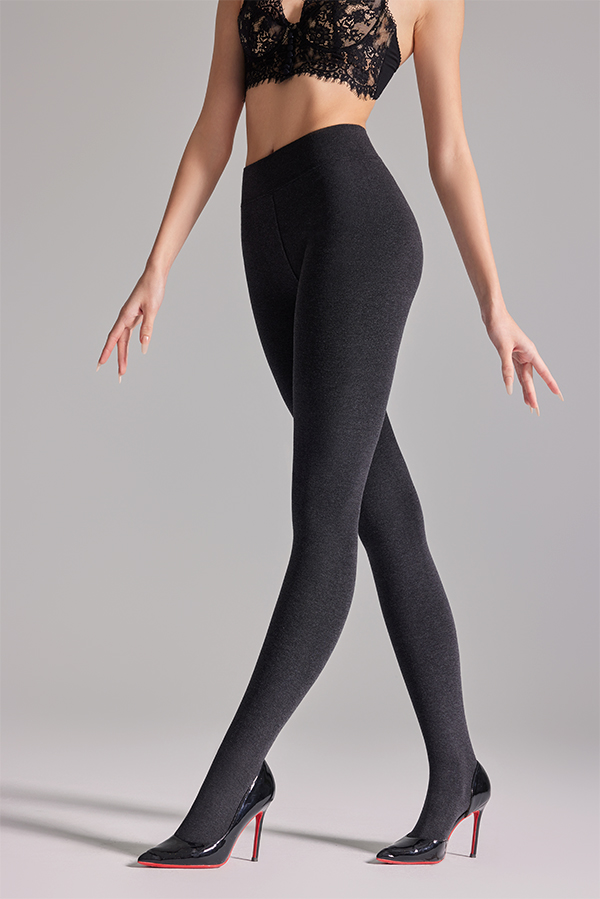
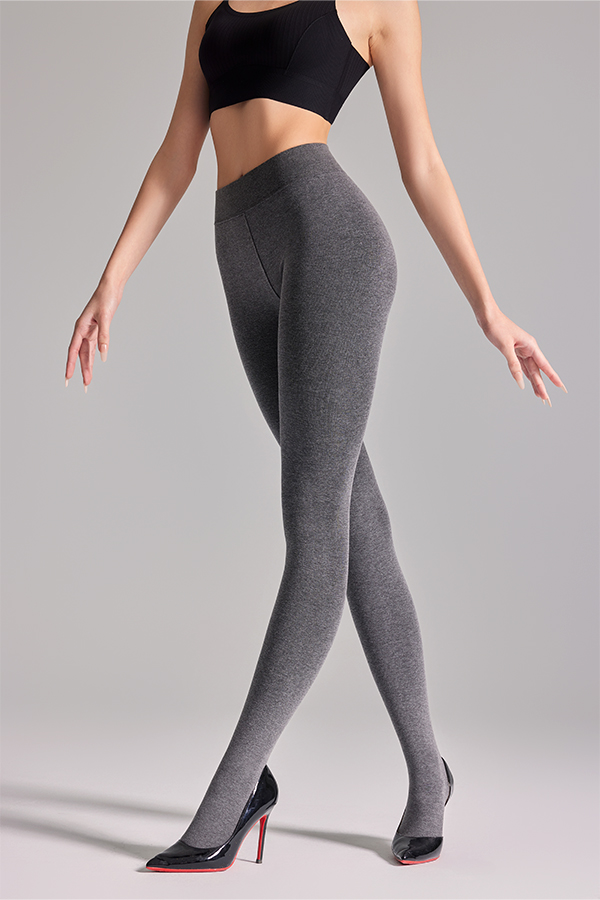
 Expanded panel thermal opaque tights

Our provided products
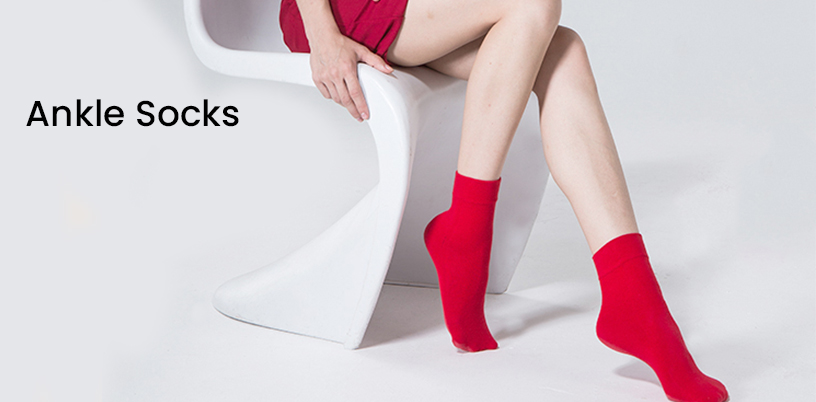
Children’s hosiery must do far more than complete an outfit. A successful pair of kids tights needs to provide visual appeal, dependable comfort, suitable stretch, reliable shape retention, and practical durability for active daily wear. The Leopard Jacquard Kids Tights, identified by product code 6008, are designed around this combination of fashion and function. Their patterned jacquard construction gives the product a recognizable appearance, while the integrated manufacturing capabilities behind the product support consistent quality, scalable production, and customization for professional buyers.
Unlike ordinary plain tights, the Leopard Jacquard Kids Tights use a structured pattern to create additional visual depth. The leopard-inspired motif offers a fashionable alternative to basic solid colors, making the tights suitable for everyday styling, seasonal collections, children’s fashion ranges, boutique assortments, and private-label programs. At the same time, the product remains practical enough for pairing with dresses, skirts, shorts, knitwear, school-inspired outfits, and casual clothing.
The product is manufactured by Zhejiang Chenyu Knitting Co., Ltd., an established hosiery producer located in Dongyang, Zhejiang, China. The company has developed a complete production system covering yarn research and development, spinning, elasticizing, yarn wrapping, greige weaving, piecing, dyeing, roughening, shaping, full inspection, and packaging. This broad production structure is particularly important for jacquard kids tights because patterned hosiery requires close control over yarn behavior, knitting precision, dimensional stability, color performance, and finishing quality.
For importers, distributors, children’s apparel brands, fashion retailers, and OEM customers, the Leopard Jacquard Kids Tights represent more than a single fashion item. They offer a product platform that can be adapted to different markets and collections while benefiting from a mature manufacturing process. The combination of decorative knitting, children-focused design, and integrated hosiery production creates a competitive option for buyers seeking an attractive product with professional factory support.
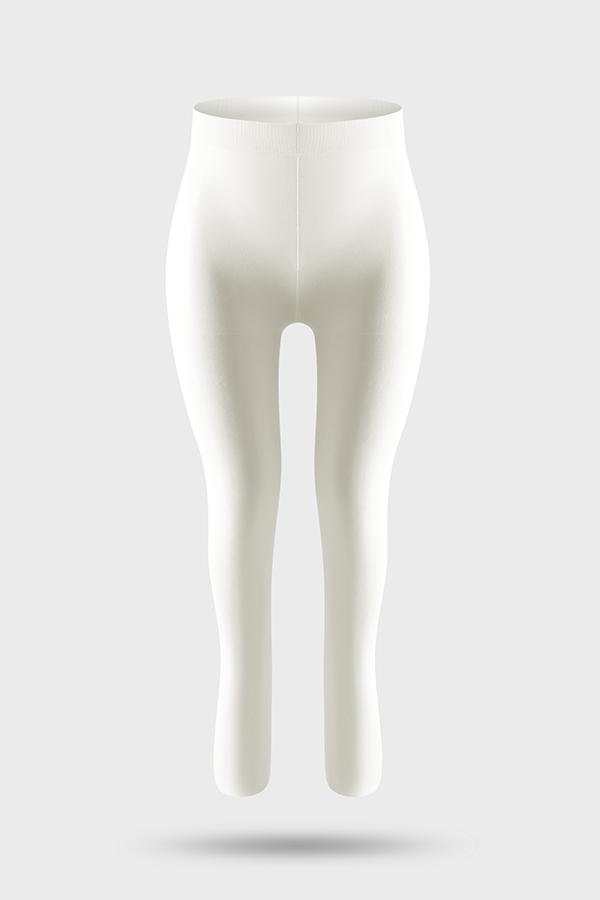
Leopard Jacquard Kids Tights
The Leopard Jacquard Kids Tights are characterized by a jacquard pattern inspired by leopard markings. This design creates a lively surface effect without relying on excessive decoration. Instead of adding separate printed elements, the visual identity is developed through the knitted structure itself. The result is a pattern that forms an integrated part of the tights and contributes to the product’s overall fashion value.
Jacquard knitting is especially useful for children’s hosiery because it can produce distinctive patterns while preserving the flexible nature expected from tights. The pattern can be designed with different color combinations, scales, densities, and contrasts depending on the requirements of a particular collection. This gives buyers an opportunity to position the product in multiple ways, from subtle animal-inspired styling to a more expressive fashion statement.
The Leopard Jacquard Kids Tights can be used as a statement accessory or as a coordinated part of a complete children’s outfit. When paired with a simple dress, the tights become the central visual detail. When worn with patterned garments, they can support a layered, playful look. Their adaptable styling makes them suitable for autumn and winter wardrobes, transitional seasons, holiday collections, fashion photography, children’s boutiques, and online retail catalogs.
The product title communicates its principal design benefits clearly. “Leopard” identifies the visual motif, “Jacquard” indicates the construction technique, and “Kids Tights” defines the intended product segment. This clarity can help retailers present the product effectively in catalogs and e-commerce listings. It also makes the item easy to classify within a wider hosiery collection that may include ankle socks, knee highs, hold-ups, garter stockings, tights, and other hosiery categories.
Jacquard construction is a valuable technique for creating patterned hosiery because the design is developed during the knitting process. This differs from a basic plain-knit product with a simple surface treatment. By controlling the knitting structure and yarn arrangement, manufacturers can create motifs with a more integrated appearance and a more textile-like visual character.
For buyers, an integrated knitted pattern may provide several commercial advantages. It gives the item a more premium presentation, supports collection differentiation, and helps prevent a basic tights assortment from appearing repetitive. In a crowded children’s apparel market, distinctive surface design can influence first impressions and improve the ability of a product to stand out in store displays or digital product grids.
Jacquard knitting also allows a factory to develop repeatable patterns in production. Once the technical specifications have been established, the factory can reproduce the design across production runs with controlled pattern placement and consistent visual balance. This repeatability is important for wholesalers and brands that need dependable replenishment or want to maintain a uniform appearance across different order quantities.
Patterned tights must be produced with particular attention to tension and yarn interaction. If these factors are not controlled properly, a design may appear distorted when the tights are stretched, or the pattern may show irregular density from one area to another. A manufacturer with experience in yarn preparation, knitting, shaping, and inspection is better positioned to manage these challenges. The integrated production system used for this product supports such coordination across multiple stages.
Children are often more sensitive than adults to tight waistbands, rough seams, inconsistent stretch, and uncomfortable fabric surfaces. For this reason, kids tights should be designed not only for visual appeal but also for ease of movement and everyday wearability. The Leopard Jacquard Kids Tights are developed within a children’s hosiery category where flexibility, fit, and finishing quality are central considerations.
A well-made pair of tights should allow children to walk, sit, run, play, and move without creating unnecessary restriction. Stretch recovery is important because the tights need to extend during dressing and movement, then return toward their intended shape after use. Proper yarn preparation and elasticizing help create a balanced fabric behavior, while shaping and finishing contribute to a more stable fit.
The waist area is another important factor. A waistband should remain in position without creating excessive pressure. For children’s products, a comfortable balance is essential: the tights should not slide easily during activity, but they should also avoid an overly rigid feeling. The final result depends on the relationship between yarn selection, knitted structure, elastic components, product dimensions, and finishing conditions.
Seam and toe construction also influence the wearing experience. Smooth and carefully finished areas can reduce irritation and improve the overall perception of quality. A complete inspection process helps identify visible defects, irregular stitching, knitting problems, and finishing inconsistencies before products are packed for delivery.
The most immediate advantage of the Leopard Jacquard Kids Tights is their visual differentiation. Plain tights remain useful for schoolwear, uniforms, and basic everyday dressing, but patterned tights provide additional styling possibilities. The leopard motif can introduce energy and personality to an outfit while maintaining the familiar practicality of tights.
Compared with products using only simple stripes or dots, a leopard-inspired jacquard pattern can create a stronger fashion impression. The organic appearance of the motif can be adapted to different age groups and style directions. Depending on color selection and pattern scale, the product may be positioned as playful, contemporary, fashionable, or premium.
Another advantage is the ability to build coordinated collections. A buyer can combine the leopard design with plain tights in matching colors, animal-inspired socks, seasonal accessories, or complementary children’s clothing. A single patterned item can therefore support cross-selling and collection storytelling. For retailers, this creates opportunities to organize products by theme rather than displaying every item as an isolated unit.
The design can also appeal to parents who want children’s clothing to look distinctive without becoming difficult to wear. Tights are already familiar wardrobe products, and the jacquard pattern adds interest without requiring a completely new garment category. This balance between familiarity and novelty is commercially valuable.
The Leopard Jacquard Kids Tights can be positioned in several market segments. In fashion retail, they may be included in an autumn or winter children’s collection. In boutiques, the product can serve as a fashionable accessory that adds detail to curated outfits. For online sellers, the recognizable pattern provides a clear visual message for product photography and promotional campaigns.
For private-label customers, the product may serve as a starting point for a customized collection. Buyers can discuss preferred colors, packaging, labeling, size ranges, and technical details with the manufacturer. The specific possibilities depend on order volume and production requirements, but a factory with OEM experience can help translate a general design idea into a repeatable hosiery product.
Department stores and distributors may also find value in the product’s ability to occupy a middle position between essential hosiery and fashion hosiery. It is more distinctive than a basic solid-color tight, yet more practical and accessible than highly specialized occasionwear. This makes it suitable for a broad assortment strategy.
The product may also fit seasonal campaigns related to animal prints, playful fashion, outdoor-inspired styling, or statement accessories. Because the design is integrated into the knitted fabric, it can support a more authentic textile presentation than a generic product with a temporary decorative treatment.
| Product Feature | Buyer Benefit | Retail Application |
|---|---|---|
| Leopard-inspired jacquard pattern | Creates a distinctive and fashionable appearance | Statement children’s outfits and seasonal displays |
| Kids tights construction | Supports flexible styling and everyday wear | Dresses, skirts, shorts, knitwear, and layered looks |
| Integrated hosiery manufacturing | Improves coordination between production stages | OEM programs and repeat purchasing |
| Shaping and finishing processes | Support fit, appearance, and dimensional consistency | Retail-ready fashion hosiery |
| Full inspection and packaging | Helps reduce quality variation before shipment | Wholesale, e-commerce, and private-label distribution |
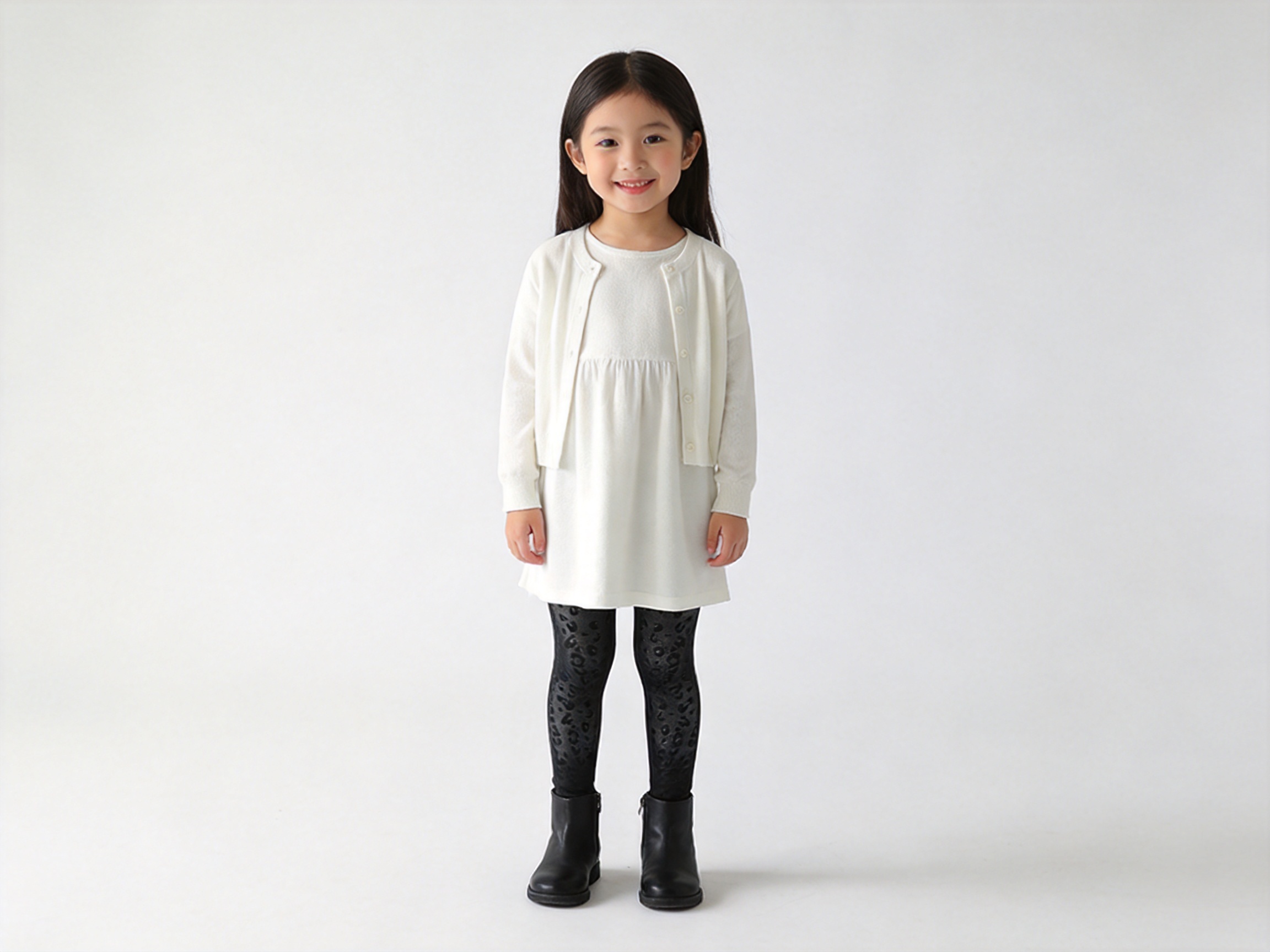
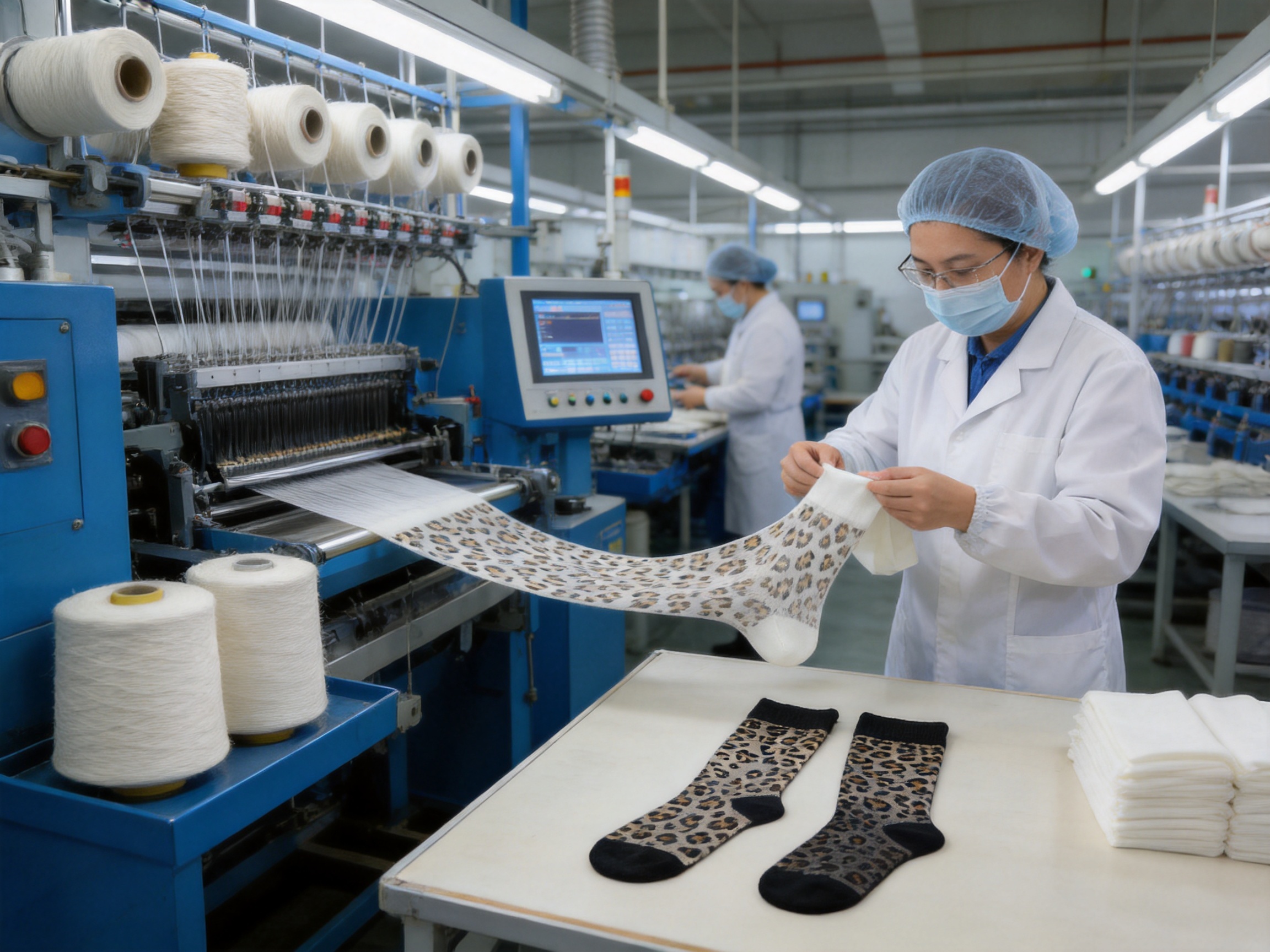
One of the strongest advantages behind the Leopard Jacquard Kids Tights is the manufacturer’s whole-industry-chain production model. Zhejiang Chenyu Knitting Co., Ltd. has built a one-stop system that covers a wide range of operations rather than depending entirely on disconnected external suppliers. This structure can improve communication, process coordination, and production oversight.
The manufacturing sequence begins with yarn research and development. Yarn characteristics influence the appearance, softness, stretch, strength, and knitting behavior of the final tights. By maintaining capabilities in yarn-related development, a manufacturer can evaluate material performance at an earlier stage. This is useful when a product requires a particular pattern definition, surface appearance, or stretch response.
Spinning and elasticizing are also important stages. Spinning establishes the basic yarn structure, while elasticizing contributes to the stretch properties required in hosiery. Tights must balance extensibility with recovery, and the correct balance depends on the intended product, target wearer, and design. A company that can coordinate these stages with later knitting and finishing operations is better equipped to manage the final result.
Yarn wrapping may be used to combine or cover yarn components in ways that support hosiery performance. The quality of wrapped yarn affects knitting efficiency, surface uniformity, and the behavior of elastic elements. Careful preparation before knitting can reduce avoidable problems during production.
Greige weaving and knitting create the basic fabric structure before later treatments. For jacquard tights, this stage is particularly important because the leopard motif must be formed with accurate pattern repeat, suitable tension, and consistent yarn placement. Technical control at this point affects both appearance and fit.
The knitting stage is where the product’s visual identity becomes tangible. A jacquard design requires accurate programming and stable machine operation. Pattern repeats must remain consistent, and the fabric must maintain a balanced structure across the leg, hip, and other sections of the garment.
Pattern control is not simply a matter of reproducing an image. A hosiery pattern changes visually when the product is relaxed, stretched, worn, photographed, or displayed. A skilled manufacturer must consider how the motif interacts with the knitted structure and the body shape. If the pattern is too dense, it may affect flexibility; if it is too sparse, the product may lose its intended visual impact.
Production control also involves monitoring yarn tension, machine settings, knitting speed, needle condition, and fabric density. These factors can influence the regularity of the pattern and the consistency of the finished tights. When production is organized within an experienced hosiery facility, technical teams can respond more efficiently to issues identified during sampling or bulk manufacture.
For OEM buyers, this capability can be especially valuable. A customer may provide a concept, color reference, artwork, or market direction rather than a complete technical specification. The factory can then help evaluate whether the design is suitable for jacquard knitting, determine practical pattern proportions, and prepare samples for review.
After the basic hosiery structure has been produced, dyeing and finishing processes influence the final appearance and hand feel. Color consistency is essential for patterned tights because variations between production lots can alter the contrast of the leopard motif. A controlled dyeing process helps maintain a stable color direction across samples and bulk goods.
Different color combinations can produce very different market impressions. A low-contrast version may look refined and easy to coordinate, while a high-contrast combination may create a bolder statement. Buyers should confirm the desired color standard, shade tolerance, and sample approval procedure before mass production.
Roughening, when included in the product’s finishing route, may influence the interior or exterior surface of the hosiery. The purpose and degree of this treatment should be confirmed according to the selected specification. Finishing must be controlled carefully because excessive treatment can affect dimensions, surface appearance, or stretch behavior.
Shaping is another key step. Tights are not simply flat pieces of fabric; they are shaped to follow the body and provide a stable wearing form. Proper shaping can help improve the relationship between the waist, hips, legs, and feet. It also contributes to the appearance of the product when it is displayed, photographed, or worn.
Finishing quality is particularly important for children’s tights because parents often examine the garment closely. A neat appearance, even knitting, balanced pattern, and clean packaging all contribute to consumer confidence. These details distinguish a professionally manufactured product from a low-cost item with inconsistent workmanship.
Full inspection is included in the manufacturer’s stated production system. This is a significant strength for buyers because hosiery quality can be affected by many small variables. Defects may include holes, dropped stitches, uneven pattern placement, color differences, yarn faults, damaged elastic, incorrect dimensions, or packaging errors.
A structured inspection process helps identify problems before products reach customers. Inspection may include visual examination, dimensional checks, workmanship review, color comparison, and packaging verification. The exact inspection protocol should be agreed upon with the buyer according to the destination market and product requirements.
For professional purchasing teams, quality consistency can be just as important as the appearance of the first sample. A product that looks excellent during development but varies significantly during bulk production creates commercial and operational risk. Integrated manufacturing, documented specifications, and inspection procedures can help reduce this risk.
Quality also affects repeat orders. Retailers prefer products that can be replenished without major differences in color, pattern, size, or finishing. Consistency supports inventory planning, customer satisfaction, and long-term product development. A stable manufacturing partner can therefore provide value beyond a single order.
Packaging is the final stage before shipment and should protect the tights from damage, moisture, contamination, and deformation. Packaging requirements may vary according to the buyer’s sales channel. Retail display packaging, private-label packaging, bulk cartons, barcode labels, and export documentation can be discussed as part of the OEM process.
The Leopard Jacquard Kids Tights are suitable for buyers who want to develop a differentiated hosiery collection under their own label. OEM cooperation can involve adjustments to colors, pattern scale, labels, packaging, size ranges, and collection structure. The exact level of customization depends on technical feasibility, minimum order quantities, sampling requirements, and production planning.
A professional OEM process normally begins with a product brief. This brief may include the target market, age range, desired appearance, color palette, fabric expectations, packaging concept, and estimated order volume. Clear information at the beginning helps the factory assess the project accurately and recommend practical solutions.
Sampling is an important part of patterned hosiery development. Buyers should review the pattern appearance on an actual knitted sample rather than relying only on a flat drawing. The product should be assessed in relaxed and stretched conditions, because the motif may change visually when worn. The sample review should also consider color, hand feel, waistband comfort, toe finishing, dimensions, and packaging presentation.
Once the sample is approved, the technical specification should be recorded in detail. Important points may include yarn composition, colors, pattern repeat, size chart, tolerances, logo placement, label details, packaging method, carton information, and inspection requirements. Clear documentation supports consistency during bulk production.
For brands building a larger children’s hosiery collection, the leopard design can serve as one style within a coordinated range. Related products may use the same base color family with different motifs, or the same motif in multiple colorways. This approach can create a recognizable collection while offering consumers a choice of styles.
A complete production chain can provide several advantages over a fragmented sourcing model. When yarn development, knitting, dyeing, shaping, inspection, and packaging are handled through a coordinated system, the manufacturer can communicate more directly across departments. This may shorten the feedback loop when a technical issue is discovered.
Vertical coordination can also support better process traceability. If a pattern problem appears during inspection, the factory has more visibility into the knitting settings, yarn preparation, dyeing route, and finishing conditions that contributed to the result. This makes corrective action more systematic than simply returning the issue to an unrelated supplier.
Another benefit is development flexibility. Fashion hosiery often changes according to seasonal trends, customer feedback, and market testing. An integrated manufacturer can evaluate adjustments more efficiently, whether the change concerns pattern density, color direction, yarn behavior, or finishing.
Cost control is also relevant, although the lowest unit price should not be the only purchasing objective. A product that requires repeated corrections, generates high defect rates, or arrives with inconsistent packaging may create greater total cost. Process integration can help support more predictable production planning and reduce unnecessary coordination between multiple suppliers.
For international buyers, a complete supply chain may simplify communication. Instead of managing separate vendors for yarn, knitting, dyeing, finishing, and packaging, the buyer can work with one primary manufacturing partner. This does not eliminate the need for detailed approvals, but it can make project management more efficient.
The manufacturer states that it adopts sustainable fabrics to reduce environmental impact and contribute to a greener future. For modern hosiery buyers, this direction is increasingly important. Consumers, retailers, and brands are paying closer attention to fiber selection, resource use, production efficiency, packaging, and product durability.
Sustainability should be considered across the entire product life cycle. Material choices are one part of the discussion, but manufacturing efficiency, reduced waste, inspection accuracy, and product longevity are also relevant. A well-made pair of tights that remains attractive and wearable for longer may offer better practical value than a product that must be replaced quickly.
For OEM projects, buyers should communicate their sustainability objectives at the beginning. These may include preferred fibers, recycled content, certified materials, reduced packaging, responsible dyeing requirements, or documentation for specific markets. The factory can then evaluate which options are technically suitable for the desired pattern, stretch, softness, and cost target.
Patterned hosiery must maintain a balance between sustainability and performance. A material change can influence color absorption, knitting behavior, elasticity, surface appearance, and dimensional stability. Therefore, any sustainable material option should be tested through sampling and wear evaluation before bulk approval.
The manufacturer’s full-industry-chain model may also support a more organized approach to resource management. Coordination between production stages can help reduce avoidable rework and improve planning. Buyers should request relevant material and production documentation when required for their market or internal compliance procedures.
Before placing a commercial order, buyers should evaluate the Leopard Jacquard Kids Tights from both a product and supply-chain perspective. The first stage is visual assessment. Buyers should examine whether the leopard motif is clear, balanced, fashionable, and suitable for the intended age group. Pattern scale is particularly important: oversized motifs may create a bold appearance, while smaller motifs may appear more subtle and versatile.
The second stage is physical evaluation. The tights should be checked for stretch, recovery, surface feel, waistband behavior, toe construction, overall dimensions, and comfort. If the product will be sold for colder seasons, buyers may also need to assess warmth and layering suitability according to the selected specification.
The third stage is wear testing. Children’s garments are exposed to repeated movement, dressing, washing, and everyday activity. A practical evaluation can reveal issues that are not visible in a new sample. Testing should follow the buyer’s target-market requirements and should not be replaced by visual inspection alone.
The fourth stage is packaging review. Retail packaging should communicate the product’s design clearly while protecting the tights. Labels should provide accurate information required by the destination market, including size, fiber content, care instructions, origin information, and any relevant compliance details.
The fifth stage is production communication. Buyers should confirm lead times, minimum order quantities, sample charges, color approvals, inspection arrangements, shipping terms, and after-sales procedures. Clear commercial planning helps ensure that a successful product concept can be delivered reliably.
In comparison with low-cost basic tights, the Leopard Jacquard Kids Tights offer stronger visual differentiation and greater collection value. A plain product may compete mainly on price, while a jacquard product can compete through design, styling flexibility, and perceived quality. This does not mean that every market requires patterned tights, but it does mean that the product can occupy a more distinctive position.
Compared with printed tights, jacquard construction offers an integrated textile appearance. The pattern is developed through the knitted structure, which can create a more dimensional visual effect. Buyers should still assess the specific sample because pattern clarity and performance depend on the selected yarns, colors, and machine settings.
Compared with highly decorative tights using multiple attached elements, jacquard tights may offer a simpler care and production profile. The visual effect comes from the fabric rather than from numerous separate ornaments. This can support a cleaner design and make the product easier to coordinate with different garments.
Compared with suppliers that outsource many production stages, an integrated hosiery manufacturer can offer closer process coordination. This may benefit OEM customers who need to develop a pattern, adjust colors, manage samples, and maintain consistent bulk production. The practical advantage is not only factory scale but also the ability to connect technical decisions across the entire production route.
Ultimately, the best supplier depends on the buyer’s required specifications, target price, order volume, market regulations, and delivery expectations. The Leopard Jacquard Kids Tights are competitive because they combine a marketable design with a manufacturing structure capable of supporting professional development and production.
The tights can be styled with plain dresses in solid colors that echo one of the colors used in the leopard motif. This approach allows the hosiery to stand out while keeping the complete outfit balanced. Neutral garments can create a refined look, whereas bright colors can produce a more playful children’s fashion direction.
They may also be paired with skirts, shorts, oversized sweaters, cardigans, denim garments, and seasonal boots. The pattern can add visual interest to simple outfits and can help create a layered look during cooler weather. For fashion retailers, styled photography can show how one pair of tights works across multiple outfit concepts.
In a boutique setting, the product can be displayed with animal-inspired accessories or coordinated knitwear. In an online store, close-up images can emphasize the jacquard texture, while full-outfit images can demonstrate the product’s styling potential. Product descriptions should accurately state the available sizes, colors, materials, care instructions, and customization options.
The tights may also be used for holiday collections, family photography, children’s fashion editorials, birthday outfits, and special seasonal campaigns. Their adaptability allows retailers to position them as both a fashion item and a practical layering accessory.
From a merchandising perspective, patterned kids tights can increase the variety of a hosiery wall or digital catalog without requiring an entirely new product category. Retailers can use them to create visual groups by color, motif, season, or outfit. The leopard design is recognizable enough to attract attention but flexible enough to sit within different fashion stories.
The product may also encourage add-on purchases. A customer selecting a dress or skirt may look for tights that add character to the outfit. Conversely, a customer attracted by the leopard tights may explore matching apparel and accessories. This interaction can improve the role of hosiery within a broader children’s apparel assortment.
For wholesalers, the design provides an opportunity to offer retailers a product that is easier to differentiate from generic basics. For private-label brands, it can help establish a more recognizable visual direction. For e-commerce businesses, the pattern offers a strong image-based selling point, provided that the photography accurately represents color, scale, and texture.
Commercial success still depends on correct sizing, pricing, packaging, availability, and market positioning. A fashionable design cannot compensate for inaccurate product information or inconsistent fulfillment. This is why manufacturing strength and product design must work together.
Buyers interested in developing this product should provide a clear list of requirements before requesting a quotation. The brief should identify the intended market, target age group, preferred size range, desired colors, estimated order quantity, packaging style, and delivery schedule.
Technical questions should cover the fiber composition, yarn specifications, stretch expectations, pattern scale, waistband design, toe finishing, care instructions, and available certifications. If a buyer has a reference sample, artwork, or color standard, these materials should be supplied for evaluation.
Commercial questions should include minimum order quantity, sample development time, bulk production lead time, payment terms, inspection method, packaging costs, and shipment arrangements. Buyers should also clarify whether the product will be sold under an existing private label or as a standard factory item.
During sample approval, all changes should be recorded in writing. This includes revisions to color, pattern, measurements, labels, and packaging. A signed or formally approved specification can reduce misunderstandings and provide a reference for bulk inspection.
The manufacturer’s experience in foreign trade, e-commerce, and OEM customization can support different types of buyers. However, successful cooperation remains a shared process. Accurate information from the buyer and transparent technical feedback from the factory are both essential.

The main design feature is a leopard-inspired jacquard pattern knitted into the tights. This gives the product a distinctive textile appearance compared with plain children’s tights.
Jacquard refers to a patterned knitting or weaving method in which the design is formed through controlled yarn and stitch arrangements. In this product, the leopard motif is integrated into the knitted structure rather than treated as a simple separate decoration.
They are designed for the kids tights category and can be used for everyday outfits, seasonal layering, dresses, skirts, shorts, and fashion styling. Final suitability depends on the approved specification, size, material, and care requirements.
OEM customers can discuss customization options such as colors, pattern direction, size range, labels, and packaging. The available choices depend on technical feasibility, minimum order quantities, sampling requirements, and production planning.
The manufacturer’s stated production system includes yarn research and development, spinning, elasticizing, yarn wrapping, greige weaving, piecing, dyeing, roughening, shaping, full inspection, and packaging. These coordinated stages support control from raw material preparation through shipment.
Patterned tights require consistent knitting, color, dimensions, and finishing. Full inspection can help identify holes, dropped stitches, uneven pattern placement, color variation, damaged elastic, measurement problems, and packaging errors before shipment.
Yes, the product can be considered for private-label development. Buyers may discuss custom labels, packaging, colorways, size ranges, and collection planning with the manufacturer.
Buyers should check the pattern appearance in both relaxed and stretched conditions, color consistency, fabric feel, stretch recovery, waistband comfort, toe construction, dimensions, labels, packaging, and any applicable market requirements.
The manufacturer states that it adopts sustainable fabrics to reduce environmental impact. Buyers with specific sustainability goals should discuss preferred fibers, certifications, documentation, packaging, and testing requirements before production.
The manufacturer is located in Dongyang, Jinhua, Zhejiang, China, at No. 289 Juhe Road, Jiangbei Subdistrict. Its location supports access to a developed textile and hosiery manufacturing environment.
The product description identifies the Leopard Jacquard Kids Tights with the reference number 6008. Buyers should use this reference when discussing samples, quotations, and technical details.
The Leopard Jacquard Kids Tights combine a recognizable animal-inspired design with the flexibility and practicality expected from children’s hosiery. Their jacquard construction gives them a stronger fashion identity than basic plain tights, while their compatibility with dresses, skirts, shorts, knitwear, and seasonal outfits supports a wide range of retail applications.
The product’s broader strength comes from the manufacturing system behind it. Zhejiang Chenyu Knitting Co., Ltd. has developed a complete hosiery production chain covering yarn development, spinning, elasticizing, wrapping, knitting, dyeing, finishing, shaping, inspection, and packaging. This integrated structure can support better coordination, more reliable development, and stronger control over the details that matter in patterned kids tights.
For brands, distributors, retailers, and OEM buyers, the product offers a practical foundation for building a differentiated children’s hosiery collection. Its value lies in the combination of design appeal, manufacturing experience, customization potential, and quality-focused production. With clear specifications, careful sample approval, and coordinated communication, the Leopard Jacquard Kids Tights can serve as an attractive addition to modern children’s fashion assortments.
1. Product information supplied for Leopard Jacquard Kids Tights, product reference 6008.
2. Company information supplied for Zhejiang Chenyu Knitting Co., Ltd., including its history, production capabilities, and OEM services.
3. General technical principles of hosiery knitting, jacquard pattern development, elasticizing, shaping, dyeing, finishing, and garment inspection.
4. General children’s apparel product-development practices, including sample approval, size evaluation, packaging review, and market-specific quality control.
5. General sustainable textile-production principles concerning material selection, manufacturing efficiency, product durability, and responsible packaging.