
 English
  Español
  Deutsch
 Expanded panel thermal opaque tights

Our provided products
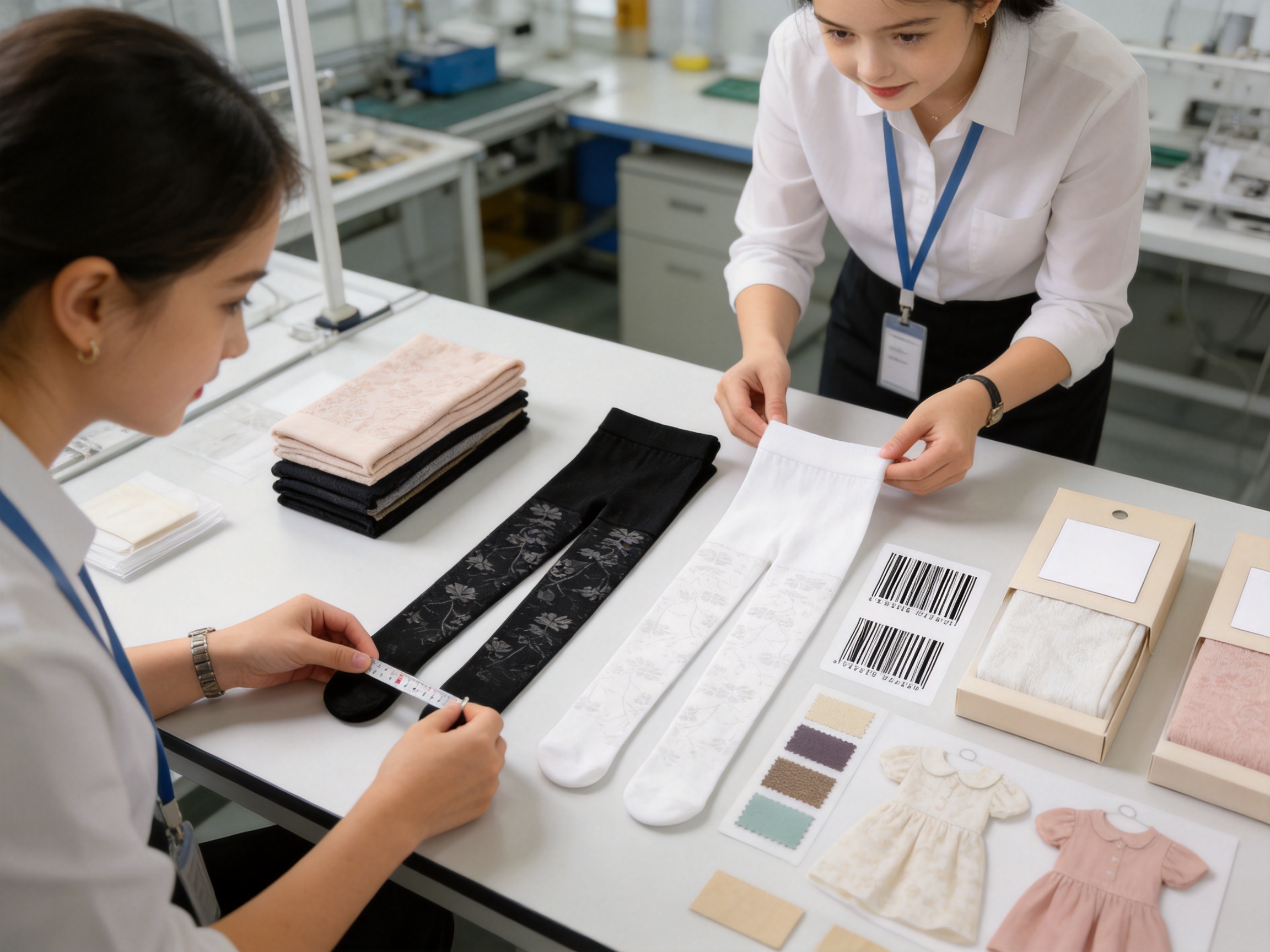
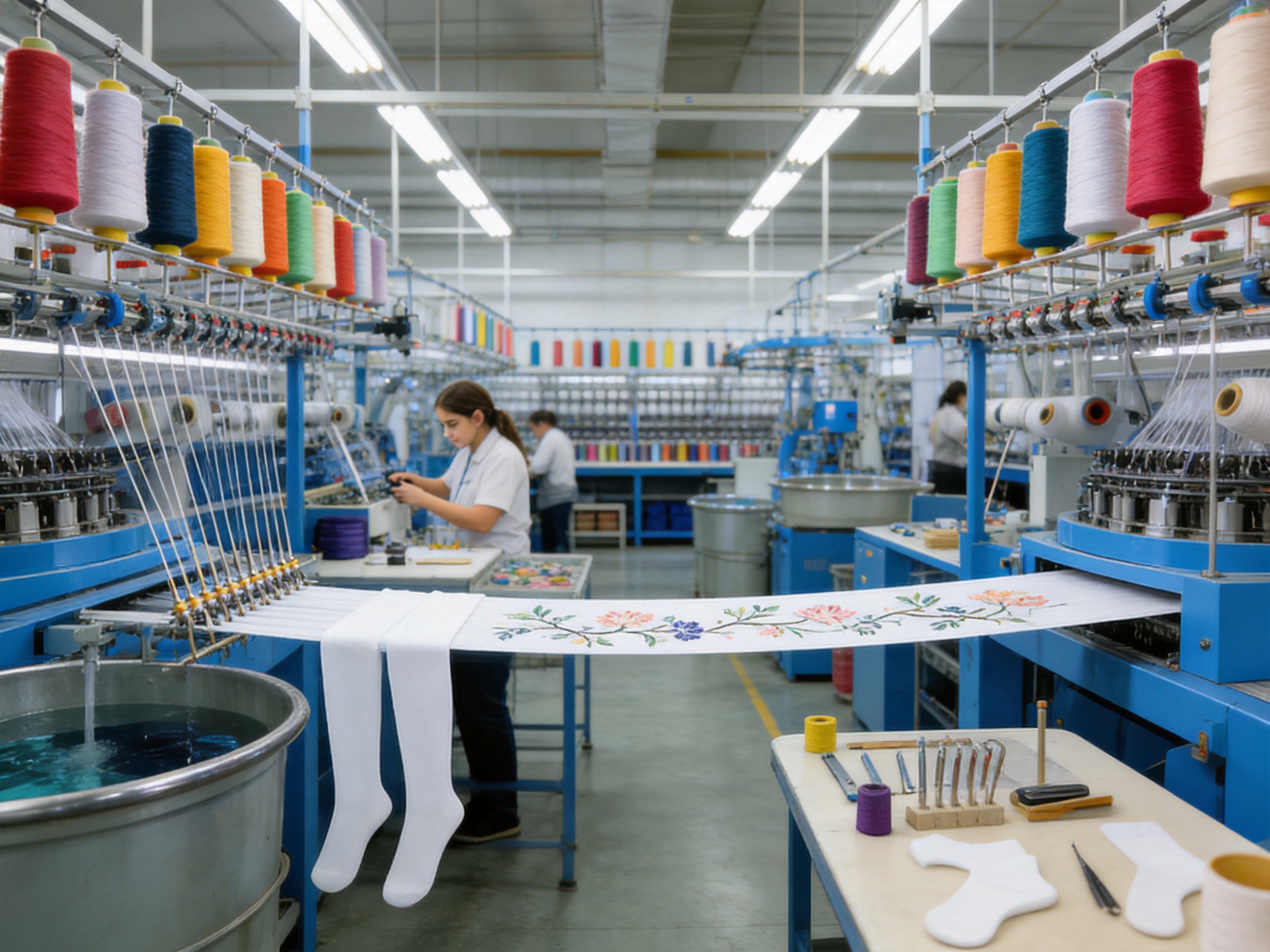
Children’s tights need to do more than complete an outfit. They must feel comfortable against sensitive skin, stay in place during movement, withstand repeated washing, and offer an appearance that parents and children both appreciate. The Branch & Flower Jacquard Kids Tights are designed around this balance of practical performance and decorative fashion. Their botanical jacquard pattern gives a distinctive visual identity, while their hosiery construction is intended to support everyday wear across seasons, occasions, and styling needs.
For retailers, fashion labels, distributors, and private-label buyers, this product also represents a strong OEM hosiery opportunity. The tights are supported by a vertically integrated manufacturing system covering yarn research and development, spinning, elasticizing, yarn wrapping, greige weaving, piecing, dyeing, roughening, shaping, inspection, and packaging. Such a complete production structure can improve communication between stages, strengthen quality control, and make it easier to develop coordinated collections for different markets.
This article examines the design value, functional advantages, manufacturing background, customization potential, quality considerations, and commercial positioning of the Branch & Flower Jacquard Kids Tights. It also explains why a specialized hosiery manufacturer with an integrated production chain can offer advantages over suppliers that depend heavily on fragmented outsourcing.
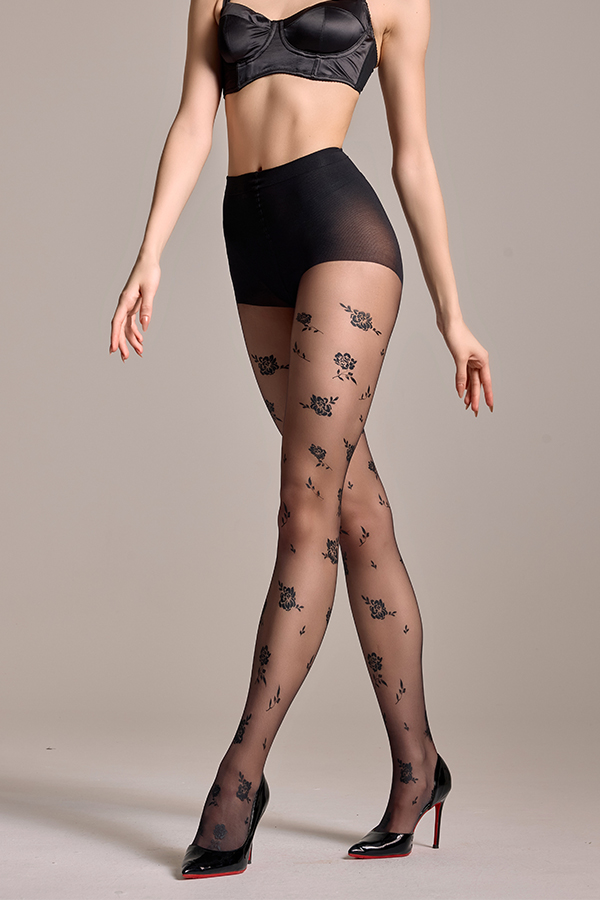
The Branch & Flower Jacquard Kids Tights are a children’s hosiery product in the Kids Tights category. The product code is 6009. Its defining design feature is a branch-and-flower motif formed through jacquard knitting. Instead of relying only on surface printing, a jacquard construction integrates the pattern into the knitted structure, creating a textile appearance with visual depth and a more premium fashion character.
The botanical theme gives the tights a versatile identity. Branch and flower patterns can work with casual children’s clothing, school-inspired outfits, seasonal dresses, partywear, skirts, tunics, and layered autumn or winter styling. The pattern is decorative without being excessively complicated, allowing the product to appeal to parents seeking practical garments and children attracted to playful fashion details.
As a children’s product, the design must combine appearance with wearability. Tights are worn close to the body and are often subjected to stretching, sitting, crawling, running, climbing, and frequent laundering. A successful product therefore depends on a coordinated combination of yarn selection, knitting structure, elastic performance, shaping, finishing, inspection, and packaging. The visual pattern may attract attention first, but long-term customer satisfaction depends on the complete product system.
The product is especially suitable for buyers looking for a fashion-led alternative to plain children’s tights. Basic solid-color tights remain important in any hosiery collection, but patterned styles can increase assortment variety and encourage outfit-based purchasing. A botanical jacquard design can also be positioned as a transitional product, suitable for multiple seasons rather than limited to one holiday or short-lived trend.
Jacquard knitting is valuable because it allows a pattern to become part of the knitted fabric structure. The result is different from a simple printed design placed on top of a plain surface. Depending on the selected yarns, stitch arrangements, and production settings, jacquard knitting can create contrast through color, texture, density, or a combination of these elements.
For children’s tights, this construction can provide a more integrated and textile-focused appearance. A branch-and-flower motif can appear refined while retaining a soft, knitted character. This is useful for fashion collections that need more visual interest than a plain base but still require a comfortable garment suitable for everyday use.
Jacquard designs can also help differentiate a product in a crowded market. Many children’s tights compete primarily through basic color, price, or licensing imagery. A botanical pattern offers another route to distinction. It can communicate creativity, natural inspiration, and boutique styling without depending on a character license or a highly seasonal graphic.
From a merchandising perspective, the motif can be coordinated with dresses, cardigans, knitwear, coats, and accessories. Retailers may present it as part of a nature-inspired collection, a girls’ occasionwear assortment, or a broader fashion hosiery range. The pattern can also support photography and visual merchandising because it remains recognizable when shown in product images, outfit combinations, and close-up fabric details.
The jacquard technique requires accurate control of knitting parameters. Pattern alignment, yarn tension, stitch formation, and fabric uniformity all influence the finished appearance. This is one reason why experience in hosiery production is important. A factory that understands the interaction between yarn behavior and machine settings is better positioned to maintain a consistent pattern across production lots.
The Branch & Flower Jacquard Kids Tights have several potential advantages when compared with ordinary plain tights. Plain tights are useful wardrobe basics, but they provide limited visual differentiation. A jacquard floral pattern can add value without requiring elaborate trims, appliqués, embroidery, or additional accessories. This can help create a fashion impression while preserving the efficiency of a knitted hosiery product.
Compared with printed tights, a jacquard structure may offer a more integrated appearance. Printed surfaces can vary according to ink coverage, printing quality, and washing conditions. A knitted pattern is developed during fabric formation, which gives it a distinctly textile-based finish. The exact performance of every design depends on materials and construction, but the integrated nature of jacquard knitting is an important selling point for buyers seeking a premium visual effect.
The botanical motif is also broadly adaptable. Character designs and novelty graphics may appeal strongly to a narrow age group or specific trend period. Branches and flowers are less restricted. They can suit younger children, older children, and different retail environments, depending on color and styling. This broader design language may support longer selling periods and more flexible collection planning.
Another advantage is the potential for coordinated color development. A buyer may request a neutral base with a subtle contrasting motif, a darker seasonal palette, a soft pastel version, or a brighter fashion interpretation. The fundamental design concept can remain consistent while the visual direction changes. This provides a useful foundation for private-label programs and seasonal capsules.
| Product consideration | Value offered by the jacquard kids tights | Commercial relevance |
|---|---|---|
| Visual identity | Branch-and-flower pattern creates a recognizable botanical appearance | Helps the product stand apart from basic plain tights |
| Textile character | Pattern is formed through knitted construction rather than being treated only as a surface graphic | Supports a more premium and fashion-oriented presentation |
| Styling flexibility | Botanical design can coordinate with dresses, skirts, knitwear, and layered outfits | Suitable for multiple merchandising themes and seasons |
| Collection development | Design concept can potentially be adapted through color and assortment planning | Useful for OEM, private-label, and capsule collections |
| Manufacturing control | Integrated hosiery production supports coordination from yarn to final inspection | Can improve consistency, communication, and production oversight |
Comfort is a central requirement in children’s tights. Children may reject a garment if it feels rough, restrictive, loose, hot, or difficult to put on. Parents also look for tights that sit correctly beneath clothing and remain practical throughout the day. Although the precise fiber composition and size range should be confirmed for each order, the manufacturing process provides several areas where comfort can be considered and controlled.
Yarn research and development is the first important stage. Yarn characteristics influence softness, elasticity, appearance, warmth, moisture behavior, and resistance to abrasion. A manufacturer with internal yarn development capabilities can assess material choices in relation to the intended product rather than treating yarn as an isolated purchased input.
Elasticizing and yarn wrapping are also significant. Hosiery depends on controlled stretch and recovery so that the garment can accommodate movement while maintaining its shape. The waistband, leg sections, and foot areas need to work together. Excessive compression may be uncomfortable, while insufficient recovery may result in sagging or poor fit. A balanced construction helps the tights remain wearable during active use.
Shaping contributes to the overall wearing experience. Proper shaping can support the transition between the body, legs, ankles, and feet. It may also help improve the visual fit of the tights under dresses and skirts. In children’s apparel, a comfortable fit should allow ordinary movement rather than making the wearer constantly adjust the garment.
Finishing processes can influence hand feel and appearance. Depending on the product specification, finishing may help stabilize the fabric, improve smoothness, or create a selected surface effect. The final outcome should be evaluated through physical samples, wear testing, laundering tests, and inspection rather than assumed only from the nominal yarn specification.
Children’s tights are not static garments. A child may walk, run, squat, sit on the floor, play outdoors, or participate in school activities while wearing them. The product must therefore support repeated extension and recovery. Good stretch behavior can improve comfort and reduce the likelihood of the tights slipping down during use.
Fit is influenced by the relationship between size grading, fabric stretch, waistband construction, leg length, foot length, and shaping. A product intended for different markets may need size charts that reflect local age, height, weight, and body-shape expectations. Buyers should confirm measurement specifications before production, particularly when developing private-label collections.
A well-planned size range can also improve customer confidence. Parents often purchase children’s tights according to age, but age alone does not always reflect body dimensions. Providing clear product measurements and fitting guidance can reduce returns and help retailers communicate more effectively with customers.
The jacquard design should be reviewed across the full size range. Pattern scale, placement, and visual balance may need adjustment so that the branches and flowers remain attractive on both smaller and larger sizes. Pattern engineering is therefore not only a decorative issue; it is also part of professional product development.
Sample evaluation should include dressing and undressing the tights repeatedly, checking waistband recovery, observing whether the fabric twists, and reviewing the fit after movement. These practical checks provide information that cannot be obtained from a flat fabric inspection alone.
Parents generally expect children’s tights to survive regular use and washing. Children’s garments may face friction from shoes, chairs, playground surfaces, and other clothing. They can also be exposed to food, soil, paint, and outdoor activity. Durability is therefore a major factor in perceived value.
Several manufacturing stages contribute to durability. Yarn selection affects tensile behavior and resistance to breakage. Knitting settings affect loop formation and fabric density. Elasticizing and wrapping influence recovery and structural stability. Dyeing and finishing must be carefully controlled so that the fabric maintains an appropriate balance of color, hand feel, and performance.
Roughening, when included as part of a product’s finishing route, may be used to create a selected inner or outer surface effect. The exact process and result depend on the product specification. For children’s tights, any surface treatment should be assessed for softness, fiber shedding, appearance retention, and suitability for repeated laundering.
Quality should not be judged only by whether a new pair looks attractive. A more complete evaluation includes dimensional stability, seam integrity, waistband recovery, color consistency, pattern clarity, and resistance to common forms of wear. A professional factory inspection system can help identify issues before products reach the customer.
Care instructions remain important even for a well-manufactured product. Retailers and brands should communicate washing recommendations appropriate to the final fiber and finishing specification. Clear care information can help protect the appearance and extend the useful life of the tights.
The manufacturer behind this product has developed a one-stop production system covering the major stages of pantyhose and hosiery manufacturing. These stages include yarn research and development, spinning, elasticizing, yarn wrapping, greige weaving, piecing, dyeing, roughening, shaping, full inspection, and packaging.
This level of integration offers several potential advantages over a fragmented supply chain. When a product moves between multiple unrelated suppliers, communication can become slower and responsibility for defects may be difficult to identify. Changes to yarn, color, stretch, pattern, or finishing may require coordination across several companies. An integrated factory can manage more of these decisions within one connected production system.
Internal control over earlier stages can also support greater responsiveness. If a jacquard pattern requires a particular yarn behavior, the development team can consider that requirement during yarn preparation and knitting planning. If dyeing or finishing reveals a concern, production information can be traced back to earlier stages more efficiently.
Vertical integration does not eliminate the need for testing or buyer approval. It does, however, create a stronger platform for controlling variables. This is especially relevant to fashion hosiery, where small differences in yarn, color, density, and finishing can significantly affect the final product.
For OEM customers, an integrated system may simplify project management. Instead of coordinating separate yarn suppliers, knitters, dyers, finishers, inspectors, and packers, the buyer can work with one manufacturing partner that understands the entire product route. This can reduce communication friction and support more consistent development records.
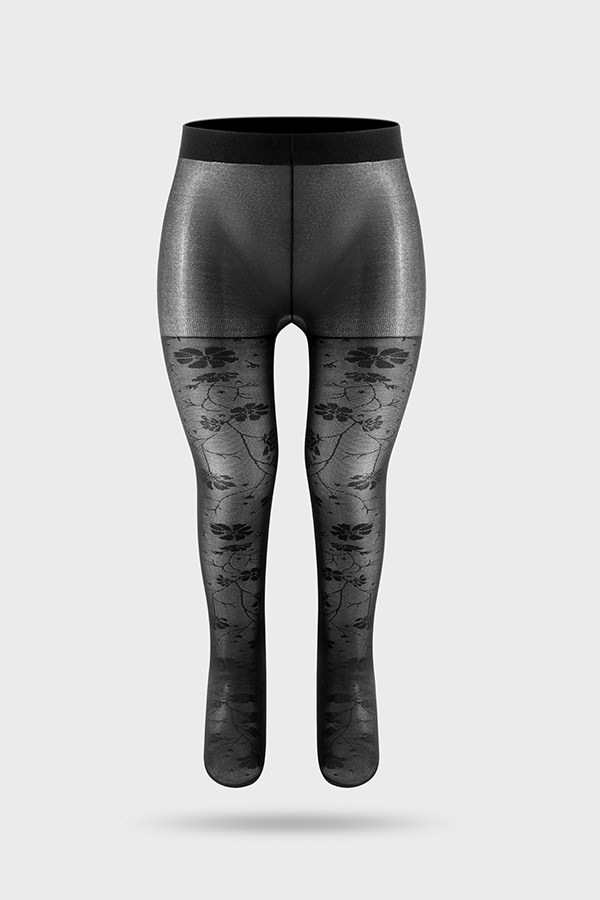
Branch & Flower Jacquard Kids Tights
Yarn development establishes the technical foundation of the product. The manufacturer can evaluate yarn properties in relation to the intended design, including softness, strength, stretch, color response, knitting behavior, and surface appearance. For jacquard tights, yarn selection must also support clear motif formation and stable fabric construction.
Different markets may prioritize different characteristics. A winter collection may emphasize warmth and a fuller hand feel, while a transitional collection may prioritize lighter construction and breathability. A premium fashion range may focus on a refined surface and precise pattern definition. Yarn development gives the factory a starting point for balancing these requirements.
Spinning transforms fiber into yarn with controlled properties. Consistency at this stage is important because variations in yarn thickness, strength, or twist can become visible in the knitted fabric. Elasticizing contributes stretch and recovery, both of which are essential in tights.
The right balance is particularly important for children’s garments. The tights should have enough elasticity to accommodate movement and maintain position, but should not create unnecessary pressure. Product development should therefore consider both performance testing and actual wear comfort.
Yarn wrapping can be used to combine or protect yarn components and to influence the final behavior of elastic materials. It may affect smoothness, appearance, stretch response, and knitting performance. Consistent wrapping helps reduce irregularities that could otherwise influence fabric quality.
The greige stage is where the basic textile structure is formed before dyeing and later finishing. For Branch & Flower Jacquard Kids Tights, accurate pattern formation is essential. Machine programming, yarn tension, stitch settings, and pattern repeat must be coordinated carefully.
At this stage, the factory can inspect fabric construction, motif clarity, holes, dropped stitches, uneven tension, and other visible issues. Early inspection is valuable because it allows problems to be addressed before additional processing increases the cost of correction.
Piecing connects or assembles fabric sections into the three-dimensional form of tights. This stage affects comfort, appearance, and structural integrity. Seam placement and construction should be reviewed to ensure that the finished garment is comfortable and visually clean when worn.
Dyeing creates the selected color direction and must be controlled for shade consistency, color penetration, and compatibility with the fabric structure. For jacquard products, color relationships between the base and motif are particularly important. A subtle contrast may require precise shade control, while a stronger contrast requires clear definition without unwanted bleeding or unevenness.
Color approval is generally best handled through laboratory dips, sample review, and production standards agreed with the buyer. Lighting conditions should also be considered because colors can appear different under daylight, retail lighting, and photography.
Roughening or related finishing operations may be used when the product specification calls for a particular surface texture or hand feel. Any such treatment must be controlled carefully. The aim should be to achieve the desired touch and appearance while maintaining fabric integrity, pattern clarity, and suitability for children’s wear.
Shaping helps convert the knitted material into a garment with a more structured fit. It can support the body, legs, ankles, and feet while improving the overall silhouette. This stage is especially important for tights because a flat or poorly shaped garment may twist, sag, or feel uncomfortable.
Full inspection is a major strength in a quality-focused hosiery operation. Inspectors can review the garment for holes, uneven knitting, incorrect pattern placement, color variation, stains, damaged elastic, seam problems, and packaging inconsistencies. A complete inspection program supports customer confidence and helps protect the reputation of the retailer or brand.
Packaging protects the tights during storage, transport, and retail presentation. It also provides an opportunity to communicate size, color, care information, product identity, and brand positioning. OEM buyers can discuss packaging formats and labeling requirements as part of the development process.
Quality control for jacquard kids’ tights should cover both appearance and performance. Visual checks should confirm that the branch-and-flower pattern is clear, correctly positioned, and consistent across the garment. The fabric should be checked for holes, loose yarns, needle lines, uneven density, stains, and other defects.
Dimensional checks are equally important. Measurements may include waistband width, total length, inseam or body length, leg circumference, ankle circumference, and foot length. Tolerances should be established according to the buyer’s approved specification and target market.
Stretch and recovery tests can help assess whether the tights maintain their intended fit after extension. Seam and connection points should be inspected because these areas may experience additional stress during dressing and movement. If the tights include special finishing, the finish should be checked for consistency and durability.
Color control should include comparison against approved standards. The product should be examined under appropriate lighting, and different production lots should be monitored to reduce shade variation. Patterned products require attention to both base color and motif color.
Packaging checks should verify that the correct product, size, color, quantity, labels, inserts, and cartons are used. Such controls are essential in OEM production, where several variations may be manufactured in the same period.
The product can serve as a starting point for OEM and private-label development. Buyers may use the existing branch-and-flower concept as a ready design direction or treat it as a reference for a customized collection. Potential development areas include color, motif scale, pattern density, size range, fiber selection, finish, labeling, packaging, and assortment structure.
Customization should begin with a clear product brief. The brief can define the target age group, intended season, retail channel, price position, color palette, quantity requirements, packaging concept, and performance expectations. It should also identify whether the buyer wants a direct version of the existing style or a modified design.
Artwork and pattern development require practical communication. Buyers should provide files or visual references in a format that allows the technical team to evaluate repeat size, line thickness, color separation, and placement. The factory can then assess whether the proposed design is suitable for jacquard knitting and recommend adjustments where necessary.
Sampling is a critical stage. A development sample allows the buyer to review the visual pattern, hand feel, fit, stretch, color, and finishing. Comments should be recorded systematically so that revisions remain clear. An approved sample becomes an important reference for bulk production and inspection.
Private-label packaging may include custom branding, size stickers, barcodes, hangtags, bellybands, cartons, or other retail formats. Packaging requirements should be confirmed early because they can affect artwork, order quantities, production timing, and shipping preparation.
A manufacturer with experience across yarn, knitting, dyeing, shaping, inspection, and packaging can provide more useful technical feedback than a supplier that only manages the final assembly. This is particularly valuable when the buyer wants to introduce a new jacquard structure or develop a coordinated hosiery range.
The company’s stated manufacturing approach includes the adoption of sustainable fabrics to reduce environmental impact and contribute to a greener future. For buyers, sustainability should be evaluated through specific material choices, process controls, documentation, packaging decisions, and supply-chain transparency.
Sustainable fabric selection can involve recycled or lower-impact fibers, depending on the product requirements and available certifications. However, the suitability of any material must be reviewed together with durability, softness, color performance, stretch, and care requirements. A material that reduces environmental impact but does not meet practical performance expectations may not deliver the best overall product value.
Manufacturing integration can support sustainability discussions because the production route is more visible within one organization. The factory can evaluate material use, production waste, dyeing requirements, packaging choices, and inspection practices as connected parts of the product lifecycle.
Durability is also an important sustainability consideration. A garment that remains attractive and wearable for longer may reduce the need for frequent replacement. For children’s tights, responsible design should therefore consider both the environmental profile of materials and the expected service life of the finished garment.
Buyers should request appropriate documentation for any environmental claims used in marketing. Sustainability statements should be accurate, specific, and supported by available evidence. Clear communication protects both the brand and the consumer.
The Branch & Flower Jacquard Kids Tights can provide competitive value in several ways. First, the botanical motif offers a distinctive appearance that is more expressive than a basic solid color. Second, the design is broad enough to fit multiple outfit categories and seasonal collections. Third, jacquard construction supports a textile-focused product story that can be positioned above entry-level printed or plain alternatives.
The manufacturing background adds another layer of differentiation. A complete hosiery production chain can support consistent product development, more direct technical communication, and stronger oversight. This may be especially important for brands whose reputation depends on reliable fit, appearance, and repeatability.
Retailers can use the product in several merchandising strategies. It may be displayed alongside children’s dresses and skirts, included in back-to-school selections, presented as part of a seasonal fashion story, or offered as an accessory that refreshes existing wardrobes. The style may also support gift-oriented packaging when developed with suitable presentation materials.
For online sellers, the pattern creates useful visual content. Close-up photography can show the jacquard detail, while full-outfit images can demonstrate how the tights coordinate with different garments. Product descriptions should communicate the design, category, fit information, care guidance, and available variations without making unsupported technical claims.
For wholesalers and distributors, the style can complement a wider hosiery range. It offers a fashion option between everyday basics and highly specialized novelty products. This middle position can help create a balanced assortment for different retail customers.
The branch-and-flower motif naturally supports a nature-inspired collection. It can be paired with botanical prints, textured knitwear, soft earth tones, floral dresses, and natural-looking accessories. A cohesive collection can make the tights feel like part of a broader fashion story rather than an isolated item.
Patterned tights can add detail to dresses used for birthdays, family gatherings, celebrations, photography sessions, and other occasions. The jacquard motif offers decorative interest while retaining the familiar silhouette of tights. Color selection and motif contrast can determine whether the product appears understated or more festive.
For everyday use, the tights can be styled with skirts, tunics, long sweaters, and layered outfits. Their design helps add personality to simple clothing. This makes them practical for retailers that want to encourage outfit-building and complementary purchases.
The product can be adapted to seasonal color stories. Darker and richer colors may suit autumn and winter, while lighter or brighter versions may work for spring and transitional collections. The botanical subject remains relevant across these changes, helping the design retain continuity within a yearly assortment.
Before placing a bulk OEM order, buyers should evaluate the approved sample in a structured way. The first area is appearance. Check the clarity of the jacquard motif, pattern alignment, color contrast, surface consistency, and overall visual quality.
The second area is fit. Test the tights on appropriate size references or dress forms, and confirm waistband comfort, body length, leg length, ankle fit, and foot dimensions. The product should be assessed during movement as well as when standing still.
The third area is hand feel. Review softness, smoothness, inner-surface comfort, and any roughened or brushed effect. Children’s tights should not have avoidable rough areas, irritating yarn ends, or uncomfortable seams.
The fourth area is performance. Consider stretch, recovery, seam integrity, dimensional stability, colorfastness, and resistance to ordinary laundering. The final test plan should reflect the buyer’s market and product claims.
The fifth area is consistency. Compare multiple samples from different production stages or lots where possible. A single perfect sample is not enough to establish production reliability.
The sixth area is packaging and compliance. Confirm labels, size information, care instructions, barcode requirements, packaging materials, carton markings, and any market-specific documentation.
| Evaluation area | Questions for the buyer |
|---|---|
| Design | Is the branch-and-flower motif clear, balanced, and consistent with the intended collection? |
| Fit | Do the waistband, body, legs, ankles, and feet meet the approved measurements and comfort expectations? |
| Material | Does the fabric provide the required softness, stretch, hand feel, and appearance? |
| Durability | Does the garment remain stable after movement and laundering tests? |
| Color | Does the base and motif match the approved color standards under suitable lighting? |
| Inspection | Are defects identified and controlled through a documented inspection process? |
| Packaging | Are the labels, barcode, product information, and retail presentation correct? |
Good consumer communication can improve satisfaction and reduce avoidable product complaints. Product listings should identify the tights as children’s jacquard hosiery and explain the botanical design in clear language. Size information should be easy to find, and retailers should avoid relying on age alone when height or body measurements are available.
Care instructions should be based on the final approved material and finishing specification. In general, consumers may benefit from gentle handling, suitable washing conditions, and protection from rough surfaces or sharp objects. Exact instructions must be confirmed for the specific composition and market requirements.
Retail imagery should show the overall silhouette as well as a close view of the jacquard pattern. If multiple colors or sizes are offered, each variation should be represented accurately. Clear descriptions help customers understand that the design is knitted into the hosiery structure rather than being an unrelated decorative accessory.
Parents may also appreciate information about intended use, seasonal styling, and outfit coordination. A concise explanation of the product’s design purpose can make the item easier to purchase and more attractive within an online or physical retail environment.
The manufacturer was founded in 1989 and is located in Dongyang, Zhejiang, China. Over nearly four decades of development, it has established domestic brands, foreign-trade operations, e-commerce activities, and OEM customization departments. This combination indicates experience in serving multiple market channels and product development needs.
The company describes itself as a high-tech enterprise with a complete pantyhose industry chain. Its production structure includes research and development, spinning, elasticizing, yarn wrapping, greige weaving, piecing, dyeing, roughening, shaping, full inspection, and packaging. These capabilities are directly relevant to the development of fashion tights because they connect material decisions with garment construction and final presentation.
For international buyers, a supplier’s ability to manage both technical production and OEM communication is important. A product such as the Branch & Flower Jacquard Kids Tights requires coordination between design, material, knitting, color, finishing, sizing, inspection, and packaging. An established hosiery specialist is more likely to understand these interactions than a general apparel factory with limited experience in stretch knitted products.
The company’s location in Zhejiang also places the operation within one of China’s important manufacturing regions. Buyers should still complete their own audits, sample approvals, testing, and commercial due diligence, but the stated manufacturing history and integrated structure provide a useful foundation for evaluating a potential supply partnership.
Hosiery products are technically different from many cut-and-sew garments. They depend on loop formation, stretch behavior, yarn tension, shaping, recovery, and precise dimensional control. Small production changes can affect fit and appearance across the entire garment. Specialized experience is therefore a meaningful competitive advantage.
Children’s tights add further requirements because they must combine fashion, comfort, safety, durability, and accessible pricing. The buyer may need a supplier that can discuss yarn hand feel, waistband recovery, pattern scale, dyeing behavior, and packaging within one development process.
A specialist can also help identify risks early. For example, a proposed motif may require a different repeat size, a color combination may need adjustment for clarity, or a particular yarn may influence the softness and stretch of the final product. Early technical advice can save time and reduce unnecessary sample revisions.
Specialized hosiery expertise is particularly valuable for repeat orders. Once the product is approved, the supplier must reproduce the same visual and physical standard across future lots. Documentation, machine settings, material records, inspection standards, and approved samples all contribute to repeatability.
The Branch & Flower Jacquard Kids Tights combine a decorative botanical pattern with the practical format of children’s hosiery. Their main design advantage is the ability to offer visual distinction without depending on a character graphic, added trim, or highly limited seasonal theme. This makes the product suitable for fashion collections, outfit coordination, and private-label development.
The product’s manufacturing strengths are closely connected to the factory’s integrated production model. Yarn development, spinning, elasticizing, yarn wrapping, knitting, piecing, dyeing, finishing, shaping, inspection, and packaging can be managed within a coordinated system. This structure supports better process visibility and may help improve consistency from raw material to finished tights.
Buyers should confirm final specifications, including composition, measurements, available colors, size range, packaging, testing standards, and production terms. Once these details are approved, the product can serve as a flexible base for a distinctive children’s hosiery program.
For retailers and brands seeking an alternative to plain basics, this style offers a balanced proposition: recognizable fashion design, broad styling potential, and the support of an experienced hosiery manufacturing platform. Its botanical jacquard appearance can attract attention, while careful development and quality control can help deliver the comfort and reliability expected from children’s apparel.
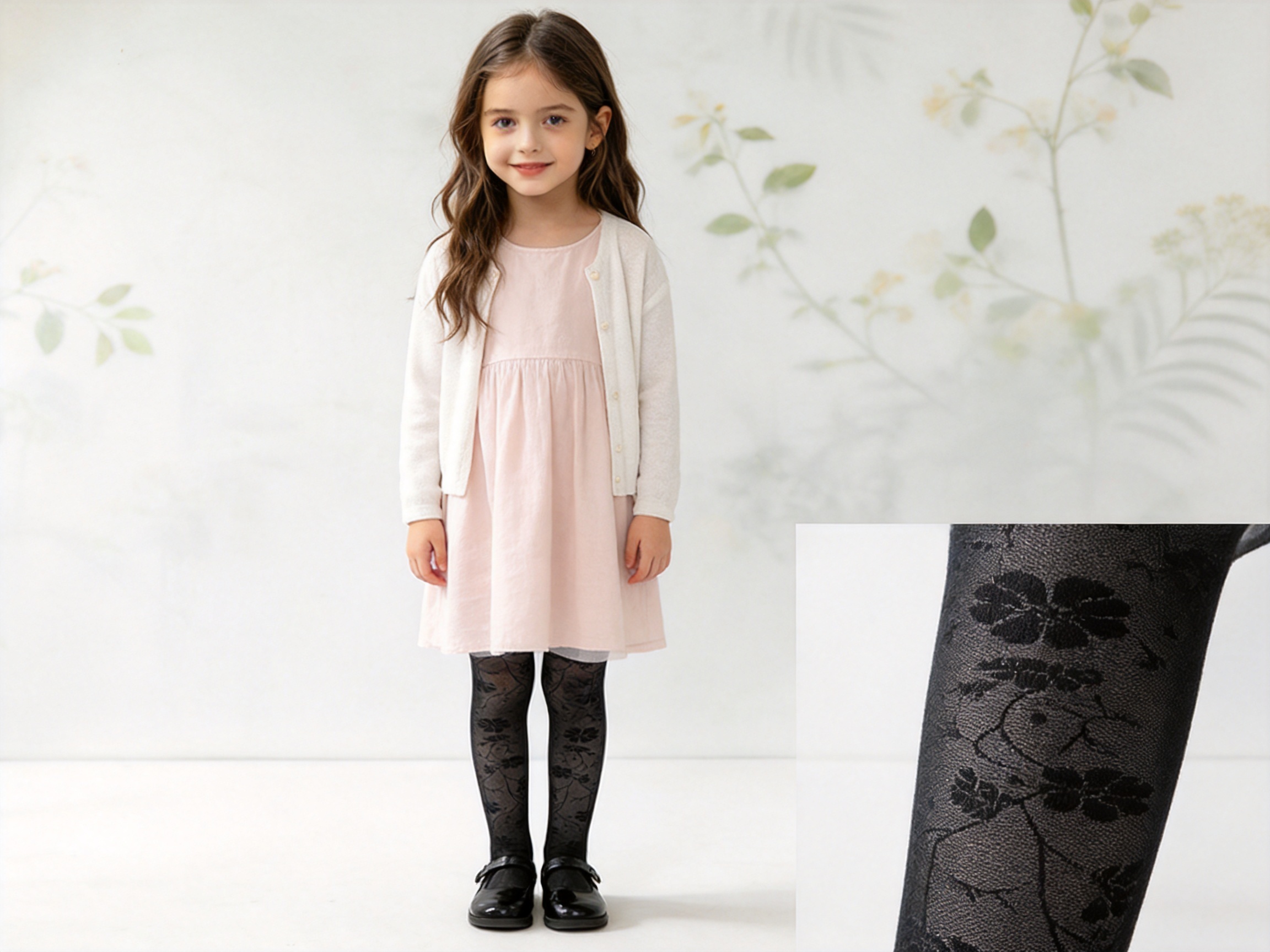
They are children’s tights featuring a branch-and-flower jacquard pattern. The product belongs to the Kids Tights category and is identified by product code 6009.
The botanical jacquard motif adds visual texture and fashion detail to the knitted fabric. It provides a more distinctive appearance than a standard solid-color style while remaining versatile for everyday and occasionwear outfits.
The product is described as jacquard hosiery, meaning the design is formed through the knitted construction. Buyers should confirm the exact technical structure and color method during sampling and product approval.
Yes. The manufacturer has OEM customization departments and a complete hosiery production system. Buyers can discuss colors, pattern adjustments, size ranges, materials, labels, packaging, and other project requirements.
The stated production chain covers yarn research and development, spinning, elasticizing, yarn wrapping, greige weaving, piecing, dyeing, roughening, shaping, full inspection, and packaging.
Vertical integration can simplify communication and improve process visibility. It allows more stages to be coordinated within one manufacturing organization, which may support consistency, traceability, technical problem-solving, and repeat-order management.
Buyers should check the motif, color, hand feel, stretch, recovery, waistband comfort, measurements, seams, foot shape, laundering performance, packaging, labels, and overall consistency. Testing should reflect the intended market and product claims.
The botanical concept is suitable for seasonal adaptation through color, motif contrast, pattern scale, and styling. Darker shades may support autumn and winter collections, while lighter or brighter colors may suit spring and transitional assortments.
Yes. The recognizable jacquard pattern can be shown through close-up fabric photographs and full outfit images. Online listings should include accurate sizing, color information, care guidance, and clear descriptions of the product’s design.
The company states that it adopts sustainable fabrics to reduce environmental impact and contribute to a greener future. Buyers should request specific material information and supporting documentation before making detailed environmental claims.
Children’s tights experience repeated stretching, movement, friction, and laundering. Testing fit, recovery, seams, color, dimensional stability, and durability helps ensure that the product performs beyond its initial visual appeal.
The manufacturer was founded in 1989 in Dongyang, Zhejiang, China. It operates domestic brand, foreign-trade, e-commerce, and OEM customization departments and describes itself as a high-tech enterprise with a complete pantyhose industry chain.
The Branch & Flower Jacquard Kids Tights offer a practical and fashion-oriented solution for children’s hosiery collections. Their branch-and-flower motif gives them a clear visual identity, while the jacquard construction supports a refined knitted appearance. The style can be positioned for everyday outfits, seasonal layering, occasionwear, and coordinated fashion ranges.
The product is strengthened by an integrated manufacturing system that covers material development, yarn processing, knitting, dyeing, finishing, shaping, inspection, and packaging. For OEM and private-label buyers, this structure can provide a more direct route from design concept to finished product. With appropriate sampling, testing, and specification control, the tights can become a distinctive addition to a children’s hosiery assortment.
1. Product development information for Branch & Flower Jacquard Kids Tights, product code 6009.
2. Company manufacturing profile and stated hosiery production capabilities.
3. General textile and hosiery quality-control principles for stretch knitted garments.
4. General apparel product-development practices covering sampling, sizing, color approval, inspection, and packaging.
5. General sustainability considerations for textile materials, garment durability, and responsible product communication.