
 English
  Español
  Deutsch
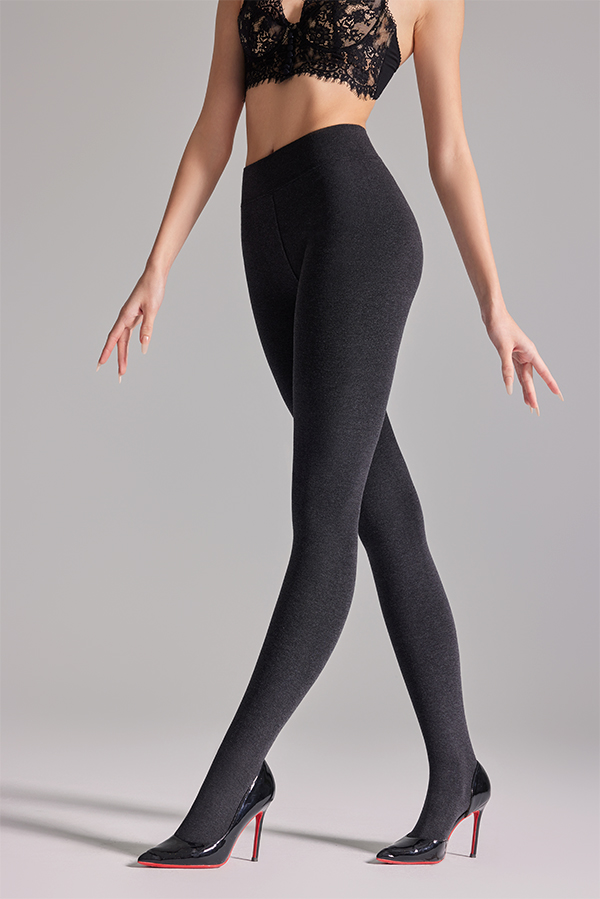
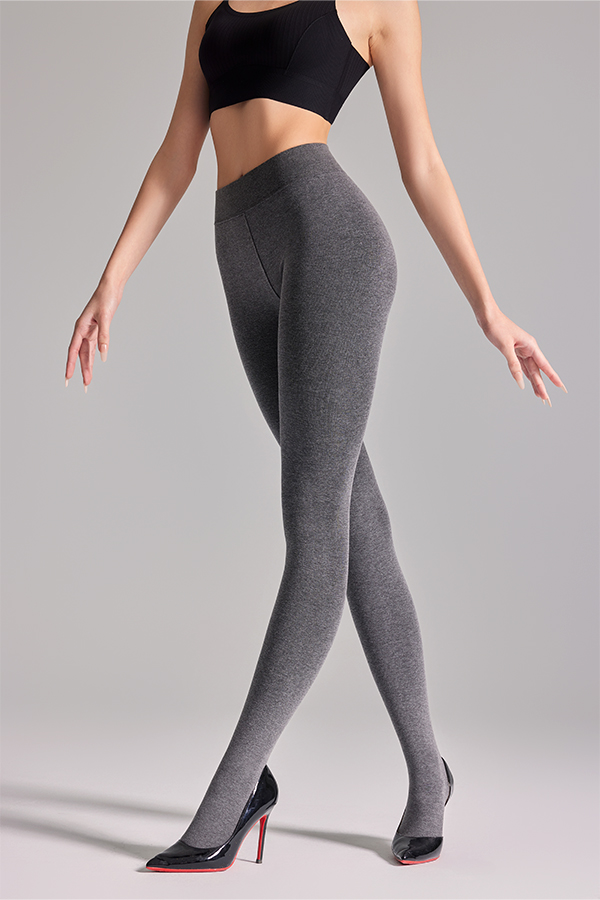
 Expanded panel thermal opaque tights

Our provided products
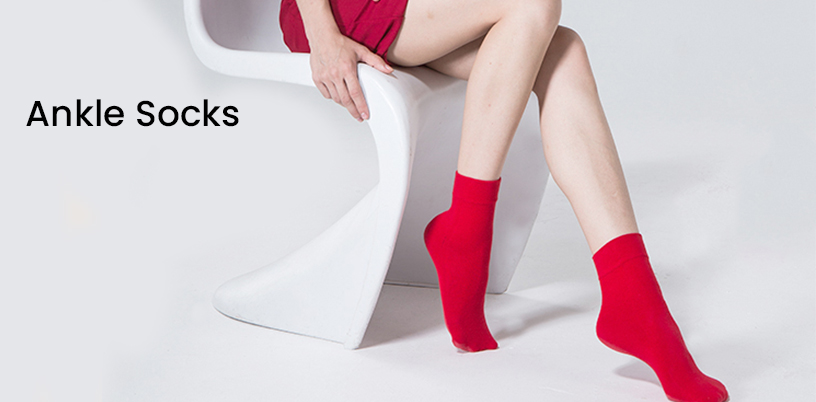
Black mid-calf socks are among the most practical hosiery essentials, yet the difference between an ordinary pair and a truly refined pair is immediately noticeable in comfort, texture, fit stability, and long-term appearance. The 3001 Core silk mid-calf socks in black are designed for consumers and buyers who need a polished daily sock with a smoother hand feel, an elegant visual finish, and reliable manufacturing consistency. Positioned within the ankle socks and short hosiery category while offering a mid-calf wearing height, this product combines everyday versatility with the elevated appeal of silk-rich comfort.
For retailers, private-label buyers, fashion brands, uniform suppliers, and hosiery distributors, this sock represents more than a simple accessory. It is a compact expression of textile engineering, yarn selection, knitting precision, dyeing control, shaping accuracy, and inspection discipline. Its black color makes it suitable for business wear, casual footwear, travel, uniforms, gifting, and premium basics collections. Its silk component gives it a softer and more luxurious wearing experience than many conventional cotton, polyester, or low-grade blended socks in the same market segment.
3001 Core silk mid-calf socks black
The 3001 Core silk mid-calf socks black style is built for a clean, understated look. The black tone is classic and easy to coordinate with leather shoes, loafers, sneakers, boots, and casual footwear. The mid-calf length gives more coverage than low-cut ankle socks, while remaining less formal and restrictive than knee-high hosiery. This makes the product especially attractive for buyers seeking a versatile sock that can fit into multiple consumer scenarios.
The product’s key value lies in the balance between elegance and practicality. Silk is valued for its natural smoothness, soft touch, light sheen, and comfort against the skin. In sock manufacturing, the challenge is to maintain these desirable qualities while ensuring stretch recovery, dimensional stability, toe comfort, heel fit, and resistance to everyday wear. The result must not only look premium when new, but also retain its refined character after repeated use and proper laundering.
Black socks are often judged harshly by consumers because fading, uneven dyeing, linting, weak elasticity, loose cuffs, and toe seam discomfort are easy to notice. A premium black mid-calf sock must therefore be engineered from raw material to final inspection. The manufacturing system behind this product supports that goal through integrated production steps including yarn development, spinning, elasticizing, yarn wrapping, greige weaving, piecing, dyeing, roughening when required, shaping, full inspection, and packaging.
Silk has long been associated with refinement, but in daily socks its benefits are not only aesthetic. The fiber can provide a naturally smooth contact surface, which helps reduce harsh friction against the skin. Its soft drape and elegant hand feel make it appealing for consumers who are sensitive to rougher fibers or who prefer a more luxurious daily basic. Compared with many synthetic-only socks, a silk-based or silk-blend sock can deliver a more elevated sensory experience.
The mid-calf silhouette adds another advantage. Low ankle socks may slip down or expose skin when worn with certain shoes and trousers. Knee-high socks may feel too warm or too formal for daily use. Mid-calf socks offer an effective compromise: they provide enough height to stay visually neat and comfortable under pants, while remaining suitable for casual wardrobes. For office workers, travelers, hospitality uniforms, premium gift sets, and boutique fashion assortments, this length is commercially reliable.
The black color enhances the product’s flexibility. It is seasonless, easy to merchandise, and less dependent on trend cycles than decorative patterns. A well-produced black sock can become a repeat-purchase item because consumers often return to the same reliable essential once they recognize its comfort and durability. For OEM and private-label customers, this makes the style a strong foundation item in a hosiery line.
Many socks in the same broad market category compete mainly on price. They may use standard cotton blends, basic polyester, or inexpensive nylon constructions with limited attention to yarn refinement, cuff comfort, toe finishing, or dyeing consistency. The 3001 Core silk mid-calf socks black style is positioned differently. It focuses on perceived quality, skin comfort, production control, and repeatable manufacturing performance.
One of the most important advantages is the smooth hand feel. Consumers often decide whether a sock feels premium within seconds of touching it. Silk adds a delicate surface sensation that ordinary commodity socks usually cannot match. When combined with controlled knitting and finishing, the sock feels more refined in the hand and more comfortable on the foot.
Another advantage is appearance. Black silk socks can show a subtle richness in color and surface texture. Competitor socks with weak dyeing control may look flat, uneven, or prone to premature fading. A carefully dyed black sock should appear deep, balanced, and clean. This is important for e-commerce photos, retail display, and consumer satisfaction after purchase.
Fit stability is also a competitive factor. A sock that looks beautiful but slips, twists, tightens uncomfortably, or loses elasticity will disappoint consumers. Through elasticizing, yarn wrapping, knitting accuracy, and shaping, the product can be tuned to provide a comfortable hold around the foot and calf. The objective is not excessive compression, but dependable positioning throughout the day.
| Feature | 3001 Core Silk Mid-Calf Socks Black | Common Low-Cost Competitor Socks |
|---|---|---|
| Touch and comfort | Smoother, softer, more refined silk-influenced hand feel | Often rougher, flatter, or less skin-friendly |
| Visual impression | Deep black tone with premium everyday styling | May appear dull, uneven, or less elegant |
| Wearing height | Mid-calf coverage suitable for business and casual use | Often limited to basic ankle or inconsistent lengths |
| Production control | Supported by integrated yarn, knitting, dyeing, shaping, inspection, and packaging processes | Often dependent on fragmented supply chains |
| OEM suitability | Appropriate for private-label, fashion, uniform, and premium basics programs | May lack stable customization and quality repeatability |
| Long-term value | Designed for comfort, neatness, and reliable presentation | Usually optimized mainly for low initial cost |
Comfort is central to hosiery performance because socks remain in direct contact with the skin for long periods. A wearer may stand, walk, commute, work, travel, or attend social occasions while wearing the same pair. The sock must manage contact pressure, friction, moisture sensation, warmth, and flexibility. Silk contributes to comfort by providing a naturally smooth, fine touch that feels different from many thicker or coarser fibers.
For consumers with refined expectations, the comfort of a sock is not measured only by softness. The cuff must hold without leaving excessive marks. The leg area must stretch without feeling restrictive. The foot section should follow the contour of the foot without bunching. The toe should avoid abrasive seams. The heel should sit in position. These details separate premium daily socks from basic mass-market products.
Because silk can be delicate compared with some industrial fibers, manufacturing expertise becomes essential. The sock must be engineered so that luxury feel and usable structure coexist. This requires thoughtful yarn preparation, appropriate knitting tension, controlled finishing, and careful inspection. When these elements are managed well, the final sock offers comfort that feels refined rather than fragile.

Zhejiang Chenyu Knitting Co., Ltd. was founded in 1989 and is located in Dongyang, Zhejiang, China. After nearly four decades of continuous development, the company has built a comprehensive hosiery manufacturing system with strengths in research, production, quality control, and OEM customization. For a product such as the 3001 Core silk mid-calf socks black style, this manufacturing background is a major advantage because silk hosiery requires consistency at every stage.
The company operates a one-stop whole-industry-chain production system covering yarn research and development, spinning, elasticizing, yarn wrapping, greige weaving, piecing, dyeing, roughening, shaping, full inspection, and packaging. This level of integration gives the manufacturer stronger control over quality, lead time, sampling, color consistency, and bulk order repeatability. In hosiery, where small variations in yarn tension, dyeing temperature, stitch density, or finishing can noticeably affect final performance, vertical integration is a significant competitive strength.
Many competitors rely on separate suppliers for yarn, knitting, dyeing, and packaging. Fragmented production can create communication gaps, inconsistent hand feel, color mismatch, delays, and difficulty tracing defects. By managing more stages internally, the manufacturer can respond faster to product development requirements and correct problems closer to their source. This is especially valuable for OEM buyers who need dependable execution across multiple batches.
The beginning of a high-quality sock is not the knitting machine; it is the yarn. Yarn determines softness, strength, elasticity, surface texture, color absorption, and long-term performance. For a silk mid-calf sock, yarn development must consider how silk interacts with supporting fibers, how the yarn behaves during knitting, and how the final fabric will feel after dyeing and shaping.
Yarn research and development allows the manufacturer to adjust fiber composition, yarn count, twist, texture, and performance balance according to customer requirements. For private-label programs, this can mean creating a softer hand, a lighter summer weight, a more supportive business sock, or a version with particular sustainability targets. The ability to develop and control yarn at the beginning of the process provides a technical advantage over competitors that purchase only standard market yarns.
In the case of black silk mid-calf socks, yarn selection also affects the richness of the black color. Fine yarn preparation helps produce a more uniform knitted surface, which improves dyeing appearance and reduces the risk of streakiness. A smoother yarn also supports a more refined visual presentation, which is important for premium basic hosiery.
Spinning is the process that transforms fibers into yarn with the required strength, fineness, and consistency. Any irregularity in spinning may appear later as uneven loops, weak areas, pilling points, or inconsistent dye absorption. Precision spinning supports a smoother and more stable sock structure. For silk-related hosiery, careful spinning helps preserve the elegant character of the fiber while creating a yarn suitable for machine knitting.
Elasticizing is equally important. A sock must stretch over the foot and calf, then recover its shape. Without sufficient recovery, it sags. With excessive tension, it feels tight and uncomfortable. Controlled elasticizing helps the sock achieve a balanced fit. It also helps maintain the mid-calf position during movement.
Yarn wrapping further supports performance by combining elasticity with cover yarns in a controlled structure. Good wrapping can improve stretch behavior, surface consistency, and wearing comfort. It also allows the sock to maintain a refined outer appearance while incorporating functional elasticity. This is one of the reasons a premium sock can feel comfortable and stay in place without looking bulky or technical.
In hosiery production, greige weaving or knitting creates the unfinished sock form before dyeing and finishing. This stage determines stitch density, shape, size, texture, and basic fit. A mid-calf sock requires accurate control of the leg tube, heel, foot, toe, and cuff. If any section is poorly calibrated, the final product may twist, shrink unevenly, feel tight in one area, or lose shape after washing.
Knitting precision is particularly important for black socks because surface defects can be visible under light. Uneven loops, yarn bars, holes, or tension marks can reduce perceived quality. A smooth black sock depends on stable machine operation, trained technicians, consistent yarn feed, and appropriate quality checks during production.
The 3001 Core silk mid-calf socks black style benefits from a manufacturing system designed for hosiery specialization rather than general textile production. Specialized hosiery knowledge helps ensure that the product is not treated as a simple tube of fabric, but as an engineered foot garment with specific zones and performance requirements.
Piecing and toe finishing are small details with a large effect on consumer satisfaction. A poorly finished toe seam can rub against the toes, create pressure in shoes, or make the sock feel cheap. A carefully finished toe area improves comfort during walking and long wear. For business and premium casual socks, toe comfort is essential because wearers often use fitted shoes where seam irritation is immediately noticeable.
Structural finishing also supports durability. The heel and toe are high-friction areas, while the cuff experiences repeated stretching. Controlled production methods help distribute stress properly and reduce premature failure. While silk gives the sock a luxurious feel, the complete construction must ensure that the product remains practical for daily use.
For OEM customers, these details matter because returns, complaints, and negative reviews often focus on fit and comfort rather than technical specifications. A sock that feels good at the toe and stays in place throughout the day creates repeat purchase behavior and strengthens brand trust.
Black may seem simple, but it is one of the most demanding hosiery colors. A premium black sock must be deep, even, and stable. It should not show patchiness, streaking, or obvious shade differences between batches. Dyeing must also respect the fiber composition and preserve the desired hand feel. Overly harsh dyeing or finishing can make a silk-influenced sock feel dry or stiff.
The company’s integrated dyeing capability supports better control over temperature, dye concentration, processing time, washing, and finishing. This helps achieve consistency from sampling to bulk production. For retailers and private-label brands, shade consistency is commercially important because products may be replenished over time, sold in packs, or displayed together. A visible shade mismatch can reduce the professional appearance of a hosiery collection.
In addition to color depth, dyeing quality influences consumer experience after purchase. A well-controlled process reduces the risk of excessive color bleeding and helps maintain a clean appearance. Consumers expect black socks to remain attractive after use and proper care, so dyeing performance becomes part of the product’s value proposition.
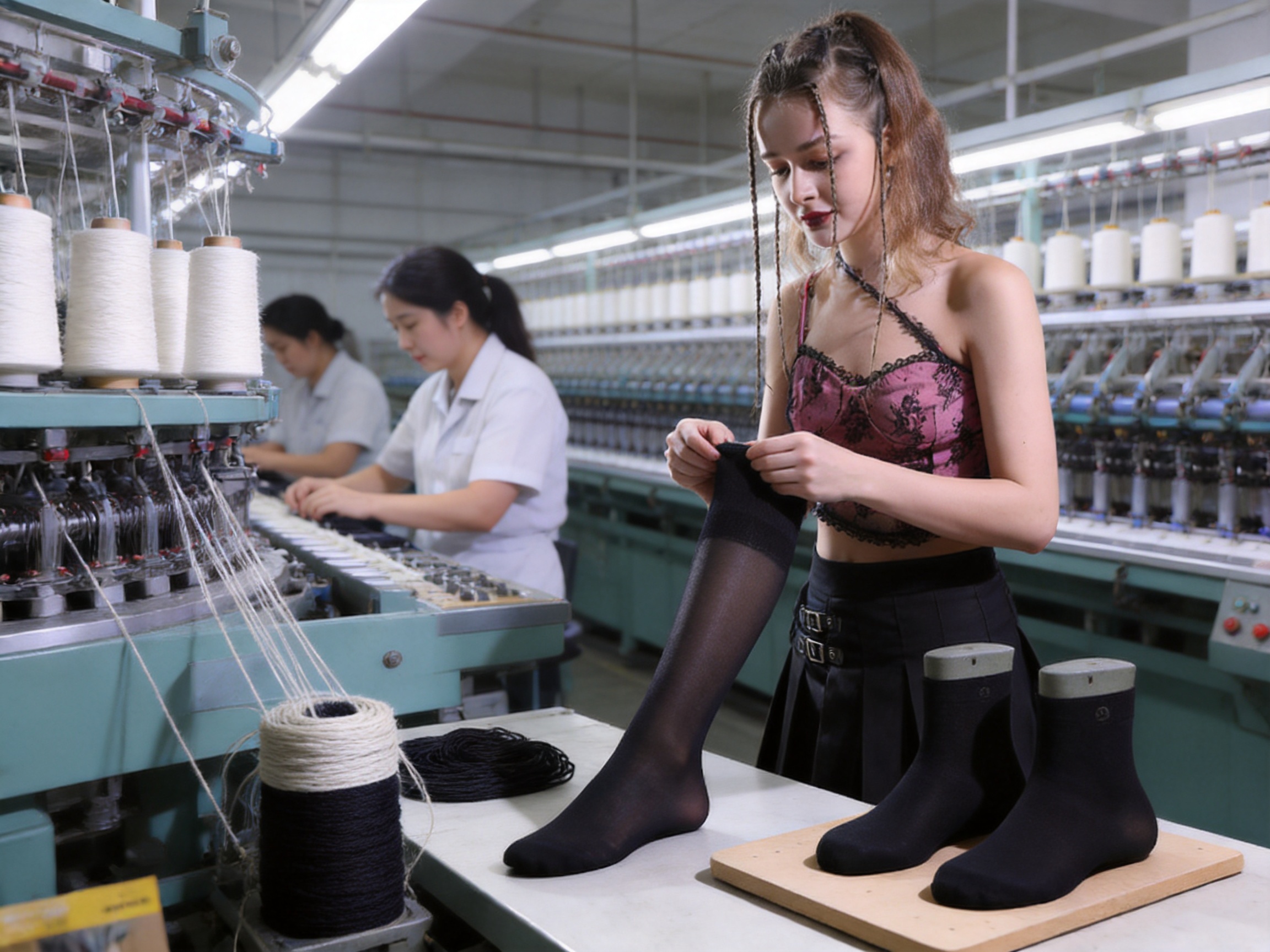
After knitting and dyeing, shaping gives the sock its final appearance and dimensional stability. Proper shaping helps the sock look neat in packaging and fit correctly on the foot. It can improve presentation for e-commerce photography, retail shelves, and wholesale samples. For a premium black sock, smooth shaping enhances the clean silhouette and reinforces the impression of quality.
Full inspection is another critical advantage. Hosiery defects can be small but highly visible to consumers: a pulled yarn, uneven cuff, weak seam, color spot, hole, stain, or size inconsistency can cause dissatisfaction. A full inspection process helps remove defective pieces before packaging. This reduces quality risk for buyers and supports the manufacturer’s reputation for reliable OEM supply.
Packaging is not merely the final step; it is part of the customer experience. Depending on the buyer’s needs, packaging may be simple, eco-conscious, retail-ready, gift-oriented, or customized for private label. A vertically integrated and experienced hosiery manufacturer can support different packaging formats while maintaining product protection and presentation.
Modern hosiery buyers increasingly consider environmental impact. The company emphasizes the adoption of sustainable fabrics to reduce environmental impact and contribute to a greener future. For OEM customers, this direction is important because retailers and consumers are asking more questions about materials, production responsibility, packaging reduction, and long-term product value.
A durable, comfortable sock can support sustainability by encouraging longer use and reducing unnecessary replacement. While the product’s elegance is important, its practical longevity also matters. A sock that keeps its shape, color, and comfort better than low-cost alternatives can reduce waste over time. Sustainable thinking in hosiery should include not only material selection, but also quality, usability, and responsible production control.
The company’s whole-chain manufacturing system can support development of more responsible hosiery solutions by allowing better traceability and process coordination. For buyers creating premium basics collections, eco-conscious capsules, or upgraded uniform programs, this capability provides a strong foundation for future product development.
The 3001 Core silk mid-calf socks black style is versatile because it does not depend on a narrow fashion trend. Its clean color, comfortable length, and refined material positioning allow it to serve many markets. In men’s business wear, it can function as a polished daily sock. In women’s fashion, it can pair with loafers, flats, boots, or minimalist styling. In travel retail, it can be presented as a comfortable essential. In uniform programs, it offers a more refined option than ordinary basic socks.
For e-commerce sellers, black silk mid-calf socks are easy to explain to consumers: soft, smooth, elegant, versatile, and suitable for daily wear. For physical retail, the product’s hand feel can become a selling point when customers touch it. For gift sets, the black color makes the sock safe and widely acceptable. For subscription basics, it offers a premium upgrade that can increase perceived value.
The product can also serve as a base for customization. OEM customers may adjust packaging, size range, fiber blend, cuff detail, logo presentation, thickness, or finishing preferences depending on market positioning. The manufacturer’s experience with OEM customization departments supports this flexibility.
OEM hosiery customers need more than a factory that can produce socks. They need a manufacturing partner that understands product development, sample approval, bulk consistency, inspection standards, and shipment readiness. The company’s background in hosiery and its complete production chain make it suitable for private-label projects requiring dependable execution.
For the 3001 Core silk mid-calf socks black style, OEM value can be seen in several areas. First, the product has broad commercial demand, so it can be used as a core item in a collection. Second, its premium feel allows brands to differentiate from commodity socks. Third, the black color simplifies assortment planning and reduces fashion risk. Fourth, the integrated production process supports customization while maintaining control over quality.
Private-label buyers often face the challenge of balancing cost, quality, and brand identity. A premium basic sock should not be overdesigned, but it must feel noticeably better than ordinary alternatives. The silk mid-calf concept meets this need because it offers a clear consumer benefit without requiring loud patterns or seasonal trend dependence.
Daily performance depends on how the sock behaves during real movement. A consumer may put on the sock in the morning, walk to transportation, sit at a desk, climb stairs, attend meetings, visit restaurants, or travel for hours. The sock should remain comfortable through these changes. Mid-calf length helps keep the leg covered, while controlled elasticity helps prevent slipping.
The black silk surface gives the wearer a sense of refinement, but the construction must also handle practical use. A comfortable cuff is essential because overly tight socks can create discomfort, while loose socks slide down. The foot portion should avoid excess fabric, especially around the toe and arch. The heel should align naturally. The product’s manufacturing process supports these goals through controlled knitting, shaping, and inspection.
Compared with lower-grade socks, this style aims to deliver a more consistent wearing experience. Commodity socks may feel acceptable at first but stretch out quickly, lose softness, or develop visible flaws. A better-engineered sock is designed to maintain a more reliable balance of softness, appearance, and fit.
In hosiery, quality control is not a single inspection at the end. It is a chain of decisions and checks. Yarn quality affects knitting. Knitting quality affects dyeing. Dyeing affects hand feel and appearance. Shaping affects size and presentation. Packaging affects final delivery. If problems are identified only at the final stage, waste and delays increase. Integrated manufacturing allows quality to be controlled earlier and more efficiently.
Full inspection gives buyers confidence that the product has been reviewed before shipment. This is especially important for black socks because lint, stains, uneven dyeing, broken yarns, and surface flaws are easy for consumers to notice. A strong inspection culture reduces risk and helps protect the reputation of both the manufacturer and the buyer’s brand.
Quality control also supports repeat orders. Retail buyers do not want one successful batch followed by an inconsistent second shipment. They need stable sizing, color, hand feel, packaging, and labeling. The company’s experience and complete production chain help support batch-to-batch consistency, which is a major advantage in long-term OEM cooperation.
A strong hosiery product should be easy for sellers to communicate. The 3001 Core silk mid-calf socks black style offers several clear selling points: silk-influenced softness, refined black appearance, versatile mid-calf length, daily comfort, and professional manufacturing. These benefits can be expressed in product pages, packaging copy, catalog descriptions, and sales presentations.
Retail storytelling may emphasize the smooth touch for sensitive daily comfort, the polished black color for work and casual outfits, or the manufacturing expertise behind the product. For premium basics, the message should be calm and credible rather than exaggerated. Consumers buying black socks usually want reliability, comfort, and quality they can feel.
The product also fits well into broader hosiery assortments. It can be sold alongside ankle socks, tights, hold-ups, garter stockings, knee highs, and other hosiery products. Within such a collection, the black silk mid-calf sock can serve as a core everyday item that anchors more seasonal or fashion-oriented pieces.
To maintain the refined feel and appearance of silk mid-calf socks, consumers should follow appropriate care practices. Gentle washing, mild detergent, separation from rough garments, and avoidance of excessive heat can help preserve softness, elasticity, and color. Although the product is designed for practical use, silk-influenced hosiery should be treated with more care than basic heavy cotton socks.
Clear care instructions can improve customer satisfaction. If buyers sell this product under a private label, packaging or product pages should explain washing and drying recommendations. Proper care reduces the risk of misunderstanding and helps consumers enjoy the intended comfort for longer.
Care guidance also supports sustainability. When consumers understand how to maintain their socks, the product lasts longer and generates better value. This reinforces the idea that premium essentials are not only about luxury, but also about thoughtful daily use.
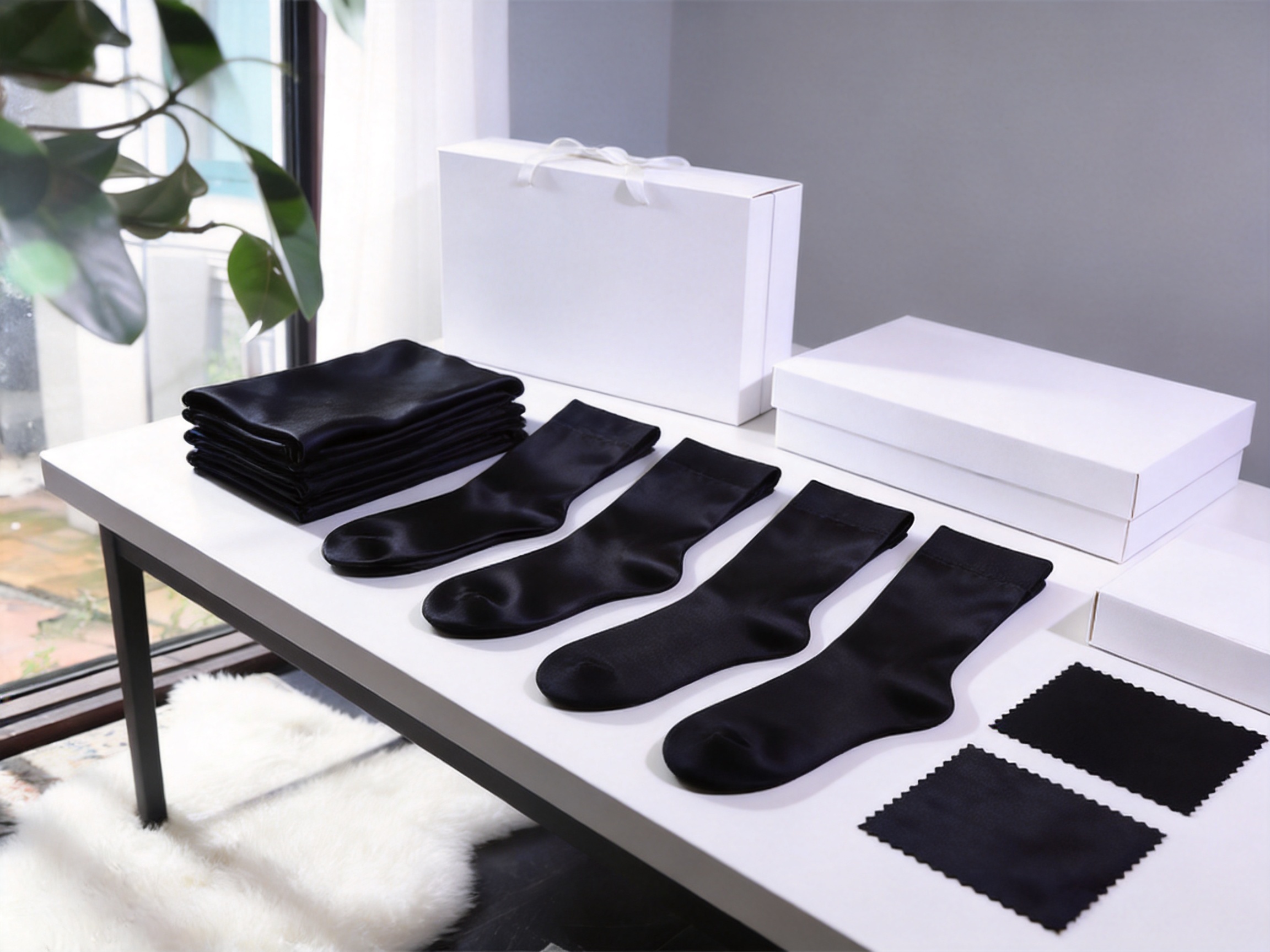
This product is suitable for fashion hosiery brands seeking an elevated basic, department-store private labels building premium essentials, e-commerce sellers needing a reliable black sock with clear consumer benefits, uniform suppliers wanting a more comfortable option, and wholesalers serving boutiques or lifestyle retailers. It can also fit gift packaging, travel essentials, business accessories, and minimalist fashion assortments.
Because the design is simple and versatile, the main differentiation comes from material quality, comfort, and manufacturing consistency. Buyers should position it as an upgraded everyday sock rather than a disposable commodity. This allows the product to compete on value, feel, and trust instead of only on price.
The black color makes inventory management easier than highly seasonal colors. The mid-calf length expands usability across demographics and occasions. The silk-related comfort provides a premium hook. Together, these features make the product a strong candidate for repeatable wholesale and OEM programs.
They are designed with a silk-influenced premium feel, a refined black appearance, and controlled manufacturing processes. Compared with common low-cost socks, they focus more on softness, fit stability, dyeing consistency, and overall presentation.
Yes. Mid-calf length offers enough coverage for trousers and office outfits while remaining comfortable for casual shoes and daily styling. The black color makes the socks especially versatile.
Silk is valued for its smooth touch, soft feel, elegant surface character, and comfort against the skin. In socks, it helps create a more refined wearing experience than many ordinary fiber blends.
Integrated manufacturing allows better control over yarn development, spinning, elasticizing, wrapping, knitting, dyeing, shaping, inspection, and packaging. This reduces inconsistency and helps ensure that bulk orders match approved samples more reliably.
Black socks must look deep, even, and clean. Poor dyeing can cause uneven shade, fading, or dull appearance. Controlled dyeing helps preserve a premium look and supports better retail presentation.
Yes. The product is suitable for OEM customization, private-label packaging, premium basics collections, business hosiery programs, and fashion retail assortments. Buyers can develop variations based on size, packaging, material preference, or market positioning.
Gentle washing, mild detergent, separation from rough fabrics, and avoidance of high heat are recommended. Proper care helps maintain softness, elasticity, and color quality.
The 3001 Core silk mid-calf socks black style is a premium everyday hosiery product that combines timeless design with advanced manufacturing support. Its black color, smooth silk-influenced hand feel, and practical mid-calf length make it suitable for many markets, from business basics to private-label fashion collections. It offers advantages over ordinary competitor socks by focusing on comfort, refined appearance, fit stability, dyeing consistency, and quality control.
The manufacturing strength behind the product is equally important. Zhejiang Chenyu Knitting Co., Ltd. brings decades of hosiery experience and a complete whole-industry-chain production system covering yarn research and development, spinning, elasticizing, yarn wrapping, greige weaving, piecing, dyeing, roughening, shaping, full inspection, and packaging. This integrated capability supports better consistency, faster development, and stronger OEM reliability.
For buyers seeking a hosiery product that can serve as a dependable premium basic, this black silk mid-calf sock is a strong choice. It is simple enough for daily use, refined enough for elevated retail positioning, and technically supported by a manufacturer with deep hosiery expertise. In a market crowded with low-cost alternatives, its value lies in the details consumers can feel: softness, fit, neatness, and confidence with every wear.
Textile Institute. Textile Terms and Definitions. Manchester: The Textile Institute.
Collier, B. J., and Epps, H. H. Textile Testing and Analysis. Pearson Education.
Kadolph, S. J. Textiles. Pearson Prentice Hall.
Gohl, E. P. G., and Vilensky, L. D. Textile Science. CBS Publishers.
Sinclair, R. Textiles and Fashion: Materials, Design and Technology. Woodhead Publishing.